
MtoZ Biolabs uses advanced instruments and analytical platforms to launch the protein structure determination service which provides comprehensive analysis of protein structural characteristics. This service is widely applied in protein function research, protein-protein interaction analysis, and protein stability assessment, offering precise structural data support for researchers and helping to gain a deeper understanding of protein functions and mechanisms.
Overview
Proteins are molecules composed of amino acids linked by peptide bonds, responsible for performing various functions within living organisms. The structure of a protein determines its function, primarily including primary structure (amino acid sequence), secondary structure (local folding), tertiary structure (overall shape), and quaternary structure (multimers). Protein structure detection is crucial for understanding its biological functions, revealing disease mechanisms, and optimizing protein expression. Protein structure analysis is widely used in biological research, structural biology, and antibody development.
Protein Structure Determination Service at MtoZ Biolabs
MtoZ Biolabs provides protein structure determination services using advanced technologies and analytical platforms.
- Precisely analyze protein structures
- Reveal interactions between proteins and ligands, or other proteins
- Assess protein stability and functional regions
- Infer the structure of unknown proteins
Our analysis offers a comprehensive understanding of protein structures, enabling researchers to gain deeper insights into protein functions and their roles in biological processes.
Technical Platforms for Protein Structure Determination Service
1. Mass Spectrometry
Uses mass spectrometry technology to precisely analyze the molecular mass, amino acid sequence, and structural characteristics of proteins, providing critical data support for structural analysis.
2. Circular Dichroism
Analyzes protein secondary structures using circular dichroism technology, helping to study protein conformational changes and stability.
3. Nuclear Magnetic Resonance (NMR) Spectroscopy
Utilizes NMR technology to deeply analyze the three-dimensional structure and dynamic characteristics of proteins, suitable for small molecules and proteins in solution.
4. Fourier Transform Infrared (FTIR) Spectroscopy
Analyzes the chemical bonds and molecular vibrations of proteins using FTIR technology, providing supplementary information for structural identification.
5. X-ray Diffraction
Uses X-ray diffraction technology to study the three-dimensional structure of protein crystals, a commonly used method for high-resolution protein structure analysis.
6. Fluorescence Spectroscopy
Utilizes fluorescence spectroscopy to analyze protein structural changes and interactions with ligands, suitable for studying dynamic processes.
7. Raman Spectroscopy
Uses Raman spectroscopy to study the molecular vibrations and structural features of proteins, particularly suitable for detecting proteins in their native state.
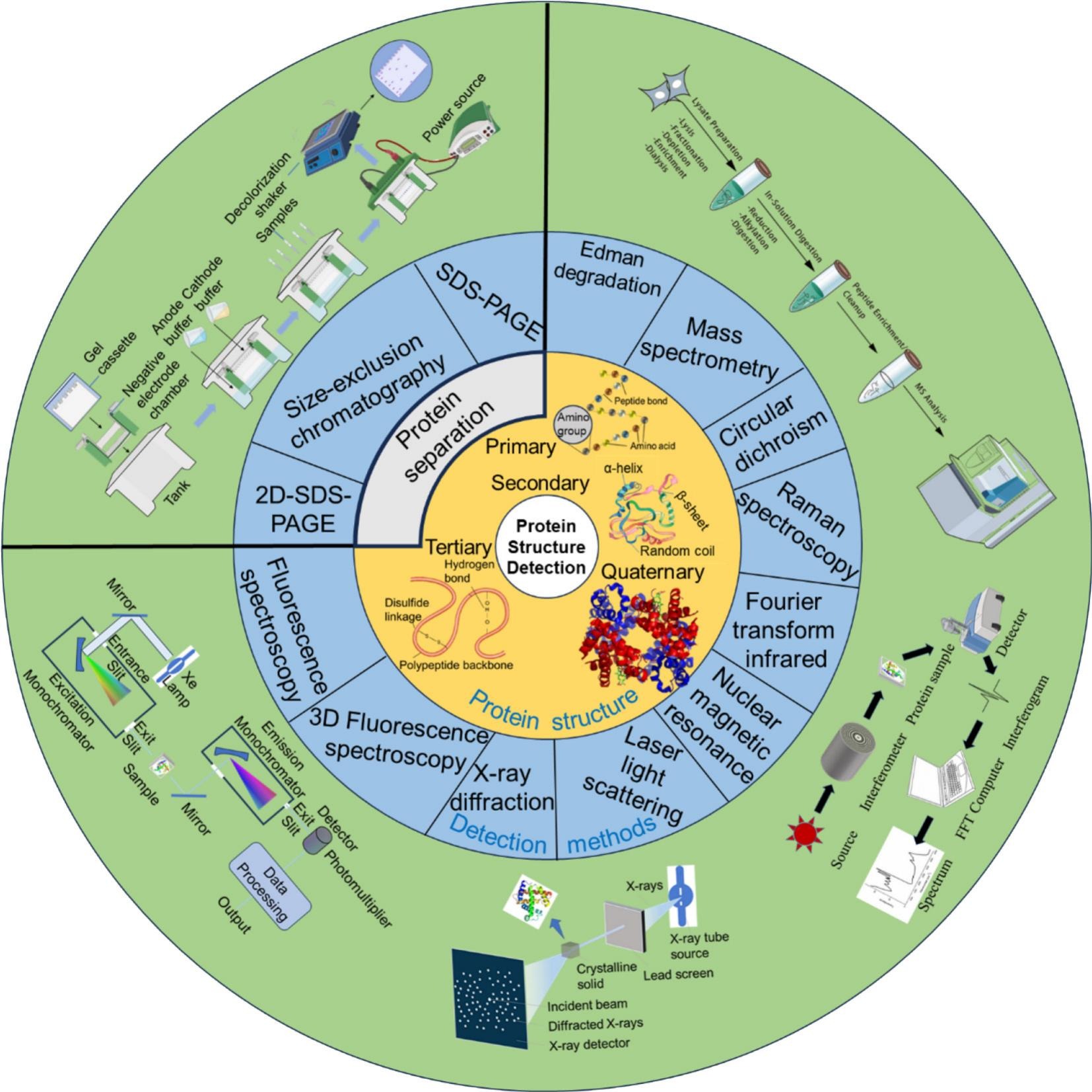
Lan, T. et al. Food Chemistry : X, 2024.
Figure 1. Techniques for Protein Separation and Detection.
Why Choose MtoZ Biolabs?
- High-Resolution Analysis: Utilizes multiple advanced technologies to provide precise protein structure analysis.
- Multi-Platform Complementarity: Combines mass spectrometry, NMR, X-ray, and other techniques to enhance the accuracy of structural analysis.
- High Sensitivity Detection: Capable of reliably obtaining structural information from low-abundance proteins and complex samples.
- Fast Result Output: Optimized experimental workflows allow for quick delivery of high-quality structural analysis results.
- Customizable Analysis: Provides flexible structural analysis solutions tailored to different research needs.
Applications of Protein Structure Determination Service
1. Protein Function Research
Used to deeply analyze the relationship between protein structure and function, helping to understand its role in biological processes.
2. Biomarker Research
Applied to identify and validate specific proteins as biomarkers for diseases or biological processes, assisting in diagnostic and therapeutic research.
3. Protein Quality Assessment
Through structural verification of recombinant and native proteins, ensuring their expression quality and functional stability.
4. Protein-Ligand Interactions
Studying the binding properties of proteins with small molecules, drugs, or other molecules, this helps reveal the underlying mechanisms.
5. Antibody Development and Optimization
By analyzing the structure and functional regions of antibodies, this supports the optimization of antibody specificity, affinity, and stability.
Deliverables
- Comprehensive Experimental Details
- Materials, Instruments, and Methods
- Protein Structure Analysis Results
- Mass Spectrometry Data Files and Structural-Related Spectra
- Comprehensive Analysis Report
- Raw Data Files
FAQ
Q1: What types of samples are suitable?
A1: The protein structure determination service is suitable for protein samples with a clear origin, high purity, and good solubility, including recombinant proteins, purified proteins, and native protein extracts. For low-abundance or complex matrix samples, preprocessing is recommended to ensure the accuracy of structural analysis.
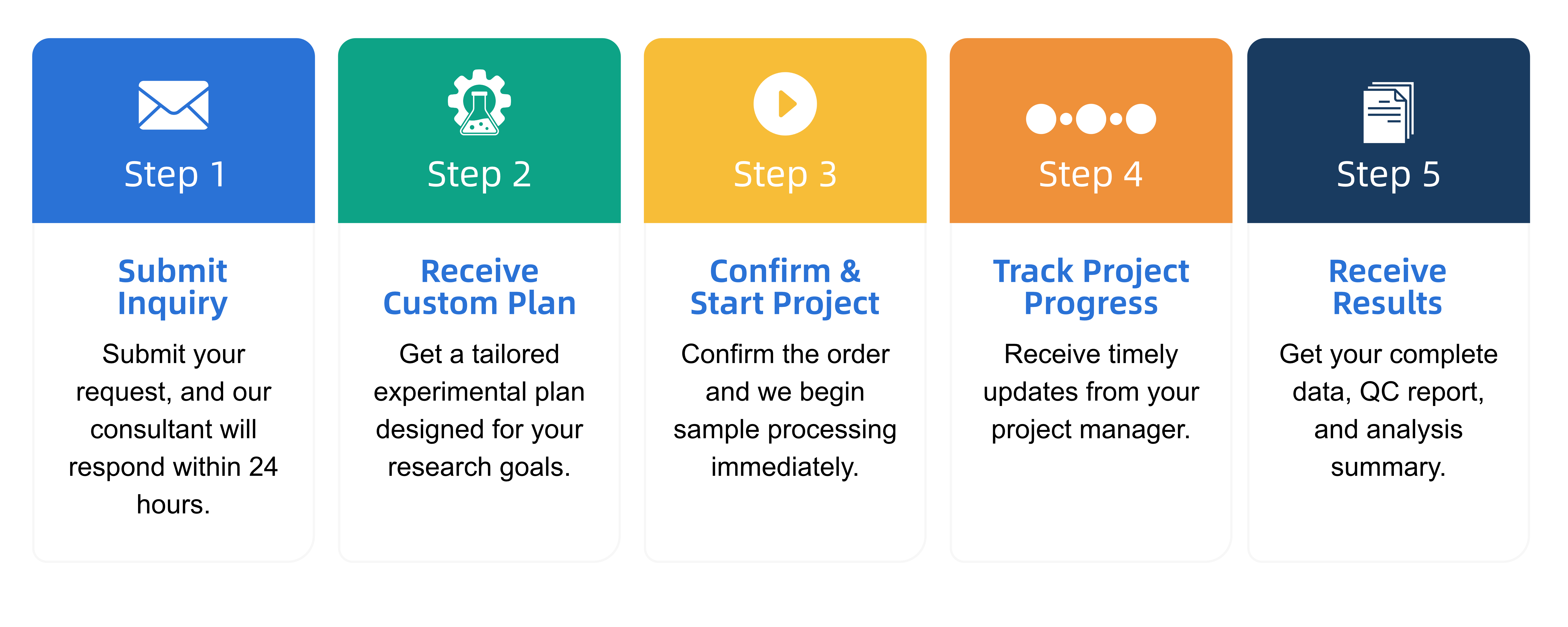
Q2: What is the service general workflow?
A2:
Q3: What data formats are provided?
A3: MtoZ Biolabs offers multiple data formats, including:
- Raw mass spectrometry data files (e.g., .d/.raw platform formats)
- Structural analysis results and related data (Excel/CSV)
- Analysis report PDF (including experimental methods, data summary, and structural analysis)
- Visualization files (PNG/TIFF format)
If special analytical requirements exist, data formats can be customized according to project specifications.
Q4: How should I prepare my samples?
A4: To ensure optimal structural analysis, we recommend:
- Sample purity: Avoid components like high salt, detergents, and other substances that may interfere with analysis.
- Sample storage: Store samples at 4℃ for short-term use, and at -80℃ for long-term storage, avoiding repeated freeze-thaw cycles.
- Sample transport: Use dry ice or ice packs for cold transport, ensuring sealed packaging to prevent leakage and contamination.
- Additional information: Provide sample type, concentration, buffer system, and pretreatment steps to help tailor the most appropriate analysis strategy.
For more information, please refer to Sample Submission Guidelines for Proteomics, Sample Submission Guidelines for Metabolomics.
Start Your Project with MtoZ Biolabs
Contact us to discuss your experimental design or request a quote. Whether you are exploring the structural features of proteins or studying protein-ligand interactions, we can provide precise and reliable analytical support.