
MtoZ Biolabs provides proteomics services for agricultural and plant research, helping researchers decode protein dynamics in crops, model plants, and specialty species. By combining advanced LC-MS/MS platforms with specialized plant sample preparation, our Agricultural and Plant Research services support studies on reproductive development, stress responses, disease resistance, and crop improvement from a protein-centered perspective.
Proteomics in Agricultural and Plant Research
Plant systems are governed by complex protein networks that regulate growth, development, and responses to the environment. Proteins coordinate key processes such as flowering, seed development, nutrient utilization, hormone signaling, and defense against pathogens and pests. Understanding these protein level changes is essential for improving yield, quality, and resilience in agricultural systems.
Agricultural and plant proteomics is now routinely applied to:
-
Dissect reproductive development from floral transition to seed maturation
-
Characterize plant responses to drought, salinity, heat, cold, and nutrient stress
-
Reveal mechanisms of disease resistance and host pathogen interactions
-
Discover protein markers associated with yield, quality, and stress tolerance
-
Support breeding, genome editing, and trait introgression programs
MtoZ Biolabs' Agricultural and Plant Research services are designed to translate these proteomic insights into actionable data for basic plant biology, crop science, and applied agricultural research.
Service at MtoZ Biolabs
MtoZ Biolabs offers flexible proteomics solutions tailored to key questions in plant and agricultural biology.
1. Proteomics in Reproductive Development Research
Techniques Used
-
Label-free and DIA based quantitative proteomics for global protein profiling
-
TMT or iTRAQ multiplexed quantification for multi stage comparisons
-
Phosphoproteomics and other PTM analysis to track signaling events
Service Content
-
Comparative proteomic analysis of floral meristems, flower organs, anthers, pollen, ovules, embryos, and developing seeds
-
Quantitative profiling of hormone signaling components, transcription factors, and structural proteins during reproductive transitions
-
Identification of differentially expressed and post translationally modified proteins across developmental stages or genotypes
Typical Applications
-
Elucidating molecular mechanisms of floral induction and fertility
-
Supporting hybrid breeding, male sterility systems, and yield optimization
2. Proteomics in Abiotic Stress Response Research
Techniques Used
-
DIA and 4D label-free quantitative proteomics for high coverage stress profiling
-
Targeted proteomics for verification of key stress response markers
-
PTM focused workflows (for example phosphorylation, oxidation, acetylation)
Service Content
-
Global proteome comparison under drought, salinity, heat, cold, flooding, nutrient deficiency, or toxic metal exposure
-
Time course studies to track early and late stress response proteins
-
Pathway and network analysis for antioxidant systems, osmotic adjustment, membrane stability, and energy metabolism
Typical Applications
-
Identification of stress tolerance associated proteins in elite or wild germplasm
-
Mechanistic analysis of stress responsive signaling cascades and transcriptional regulators at the protein level
-
Prioritization of candidate genes and pathways for engineering climate resilient crops
3. Disease Resistance and Plant-Microbe Interaction Proteomics
Techniques Used
-
Discovery proteomics (DIA, label-free, TMT) for host and pathogen profiling
-
Targeted SRM/MRM and PRM assays for resistance marker validation
-
PTM and secretome analysis for signaling and defense peptides
Service Content
-
Proteomic comparison of resistant and susceptible varieties under pathogen infection
-
Analysis of defense related pathways, PR proteins, antimicrobial peptides, and signaling components
-
Characterization of apoplastic proteins, secreted effectors, and plant–microbe interface proteomes
Typical Applications
-
Mechanism studies of resistance to fungi, bacteria, viruses, nematodes, and insect pests
-
Identification of protein biomarkers for resistance screening in breeding programs
-
Supporting development of disease management strategies and biological control approaches
4. Proteomics in Crop Improvement and Trait Research
Techniques Used
-
Quantitative proteomics integrated with phenotypic data for trait association
-
PTM and complex analysis for fine regulation of key metabolic pathways
-
Targeted assays for routine monitoring of trait related proteins
Service Content
-
Proteomic profiling of lines differing in yield, quality, nutrient use efficiency, or stress tolerance
-
Mapping of metabolic and regulatory proteins associated with carbohydrates, lipids, proteins, vitamins, and secondary metabolites
-
Longitudinal studies across growth stages, tissues, or environmental conditions
Typical Applications
-
Trait dissection for high yield, high oil, high protein, or specialty quality crops
-
Supporting marker assisted selection and genomic selection strategies with proteomic evidence
-
Evaluating the impact of breeding and editing strategies at the protein level
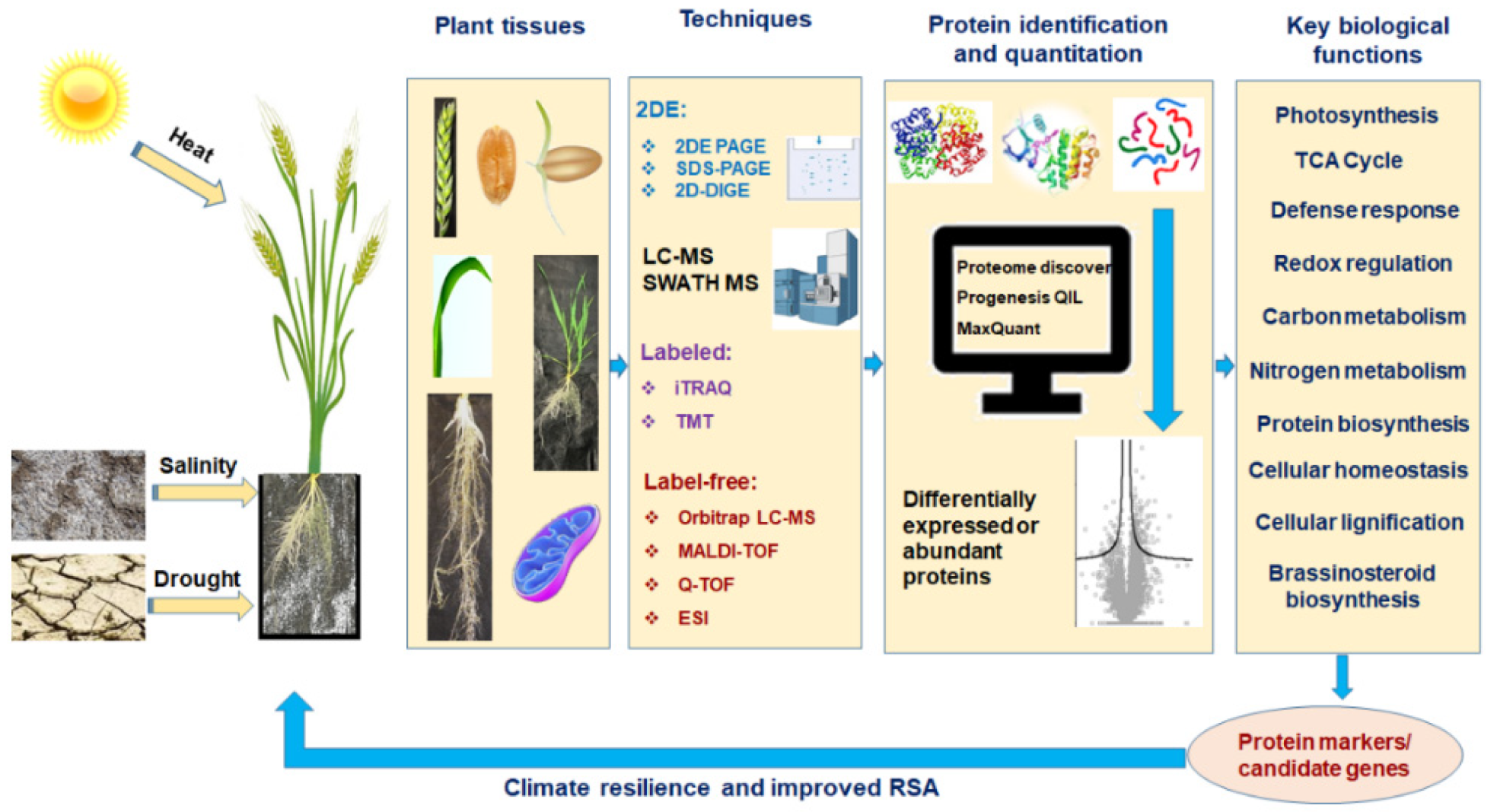
Halder, T. et al. Proteomes. 2022.
Figure 1. Proteomic Workflow for Wheat Stress Tolerance and Root System Architecture Improvement
Why Choose MtoZ Biolabs
1. Plant Optimized Workflows
Tailored extraction chemistries and cleanup strategies are designed to overcome plant specific challenges such as tough cell walls, high levels of secondary metabolites, and abundant storage compounds.
2. Deep and Flexible Proteome Coverage
A broad platform portfolio including DIA, 4D proteomics, label-free analysis, and multiplexed TMT or iTRAQ enables both broad discovery and focused quantification, from global profiles to targeted panels.
3. Support for Diverse Species and Matrices
We work with major crops, horticultural species, model plants, trees, algae, and specialty or wild species, as well as complex matrices such as seeds, fruits, roots, and mixed plant–microbe samples.
4. High Quality Bioinformatics and Interpretation
Our bioinformatics team provides comprehensive analyses linking protein changes to pathways, networks, and phenotypes, with deliverables suitable for publication, grant submission, and breeding decisions.
5. Collaborative and Customizable Service Model
Project designs, data outputs, and timelines are customized to your scientific goals, with interactive communication throughout the study.
FAQ
Q1: What types of samples are suitable?
We support a wide range of agricultural and plant samples, including but not limited to:
-
Fresh or frozen plant tissues such as leaves, roots, stems, flowers, fruits, and seeds
-
Whole seedlings, specific organs, or dissected developmental zones
-
Plant cell cultures, protoplasts, callus, and suspension cells
-
Plant-associated samples such as rhizosphere fractions or microbe-enriched pellets
If you have a special sample type, you can contact MtoZ Biolabs for a feasibility evaluation.
Q2: How should I prepare my samples?
- Use freshly collected material whenever possible, or snap-freeze tissues in liquid nitrogen immediately after harvest
- Avoid repeated freeze–thaw cycles to prevent protein degradation
- Do not add high levels of detergents, salts, or strong chaotropes
- Store samples at −80 °C and ship them on dry ice in clearly labeled tubes with a detailed sample list
For more information, please refer to Sample Submission Guidelines for Proteomics.
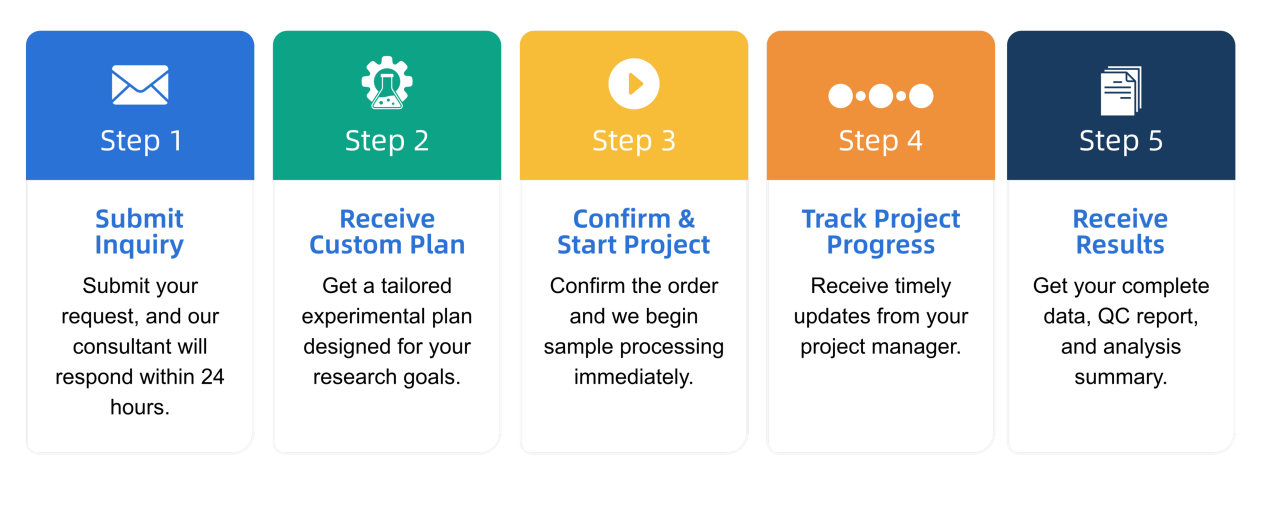
Q3: What is the service general workflow?
Q4: What data formats are provided?
- Raw data files in instrument specific formats such as .raw, .d, or .wiff
- Protein and peptide identification and quantification tables in Excel or CSV formats
- Functional annotation and enrichment results suitable for downstream interpretation
- Publication ready figures such as heatmaps, volcano plots, and clustering plots in high resolution PNG or TIFF
- A structured PDF report summarizing workflow, quality control metrics, key findings, and biological interpretation
- Additional customized formats or analysis outputs can be provided on request.
Start Your Project with MtoZ Biolabs
Whether you are dissecting stress tolerance in staple crops, exploring developmental pathways in model plants, or characterizing resistance mechanisms in specialty species, MtoZ Biolabs can support your Agricultural and Plant Research with robust, high quality proteomics.
Contact us to discuss your project goals, and our team will help design a tailored proteomics strategy that delivers clear, biologically meaningful insights for your plant and agricultural research programs.