MtoZ Biolabs provides comprehensive Chemical Proteomics Service designed to support target identification, target validation, mechanism-of-action studies, and off-target assessment for small molecules and targeted protein degradation strategies. By integrating functional proteomics approaches with high-resolution mass spectrometry, our services enable direct interrogation of small molecule-protein interactions in complex biological systems.
Overview
Chemical proteomics focuses on understanding how bioactive small molecules interact with proteins at the functional level. Unlike expression-based proteomics, chemical proteomics interrogates binding, engagement, and activity modulation, providing mechanistic insights that are critical for drug discovery and chemical biology research.
Through chemical probes, competition assays, and stability-based approaches, chemical proteomics enables researchers to identify direct targets, assess selectivity, uncover off-target liabilities, and validate mechanisms under native or near-physiological conditions.
Chemical Proteomics Service at MtoZ Biolabs
MtoZ Biolabs offers a modular chemical proteomics platform. Individual services can be selected independently or combined into integrated workflows depending on project goals.
1. Activity-Based Protein Profiling (ABPP) Service
Functional profiling of enzyme activity using activity-based probes to identify catalytically active proteins in complex proteomes.
2. Competitive Activity-Based Protein Profiling (ABPP) Service
Assessment of target engagement and inhibitor selectivity by measuring probe displacement in the presence of competing compounds.
3. DARTS Assay Service
Drug Affinity Responsive Target Stability (DARTS)-based analysis to identify ligand-binding proteins through compound-induced protection from proteolysis.
4. Target Validation and Off-Target Analysis Service | Molecular Glue
Proteome-wide evaluation of target engagement and induced protein interactions mediated by molecular glue compounds.
5. Target Validation and Off-Target Analysis Service | PROTAC
Systematic assessment of target degradation efficiency, selectivity, and potential off-target effects associated with PROTAC molecules.
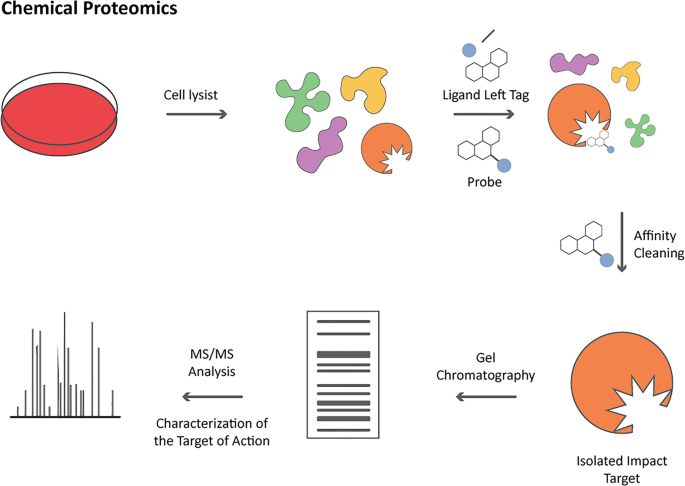
Schmidt, M. F. et al. Chem. Biol. 2022.
Figure 1. Chemical Proteomics Workflow for Target Identification and Characterization
Why Choose MtoZ Biolabs?
- Function-Centered Proteomics Platform: Focus on protein activity, binding, and engagement rather than expression alone.
- Support for Modern Drug Modalities: Proven workflows for small molecules, molecular glues, and targeted protein degraders.
- Compatibility with Complex Biological Samples: Applicable to cell lysates, tissues, and native proteomes.
- Flexible Service Integration: Individual assays or combined chemical proteomics strategies based on project needs.
What Could Be Included in the Report?
- Comprehensive Experimental Details
- Materials, Instruments, and Methods
- Total Ion Chromatogram & Quality Control Assessment
- Data Analysis, Preprocessing, and Estimation
- Bioinformatics Analysis
- Raw Data Files
Start Your Project with MtoZ Biolabs
MtoZ Biolabs delivers Chemical Proteomics Service that enables direct investigation of small molecule-protein interactions and functional target engagement. Whether you are validating a target, profiling selectivity, or characterizing novel drug modalities, our Chemical Proteomics Service provides reliable, mechanism-driven insights. Contact us to discuss your project objectives and service configuration.
FAQ
Q1: What types of samples are suitable?
Chemical Proteomics Service supports multiple sample types commonly used in discovery and translational research, including:
- Cultured cells and cell lysates.
- Tissue-derived protein extracts.
- Other complex biological samples relevant to compound-protein interaction studies.
Q2: How should I prepare my samples?
- Prepare samples under mild conditions to preserve native protein activity and compound-protein interactions.
- Avoid harsh detergents, strong reducing agents, or extreme pH conditions.
- Cell samples can be processed fresh or stored at -80°C prior to analysis.
- Use MS-compatible buffers and appropriate protease inhibitors for lysate-based assays.
For more information, please refer to Sample Submission Guidelines for Proteomics. If you are unsure about sample preparation, our team is available for consultation and can guide you through the process to ensure optimal results.
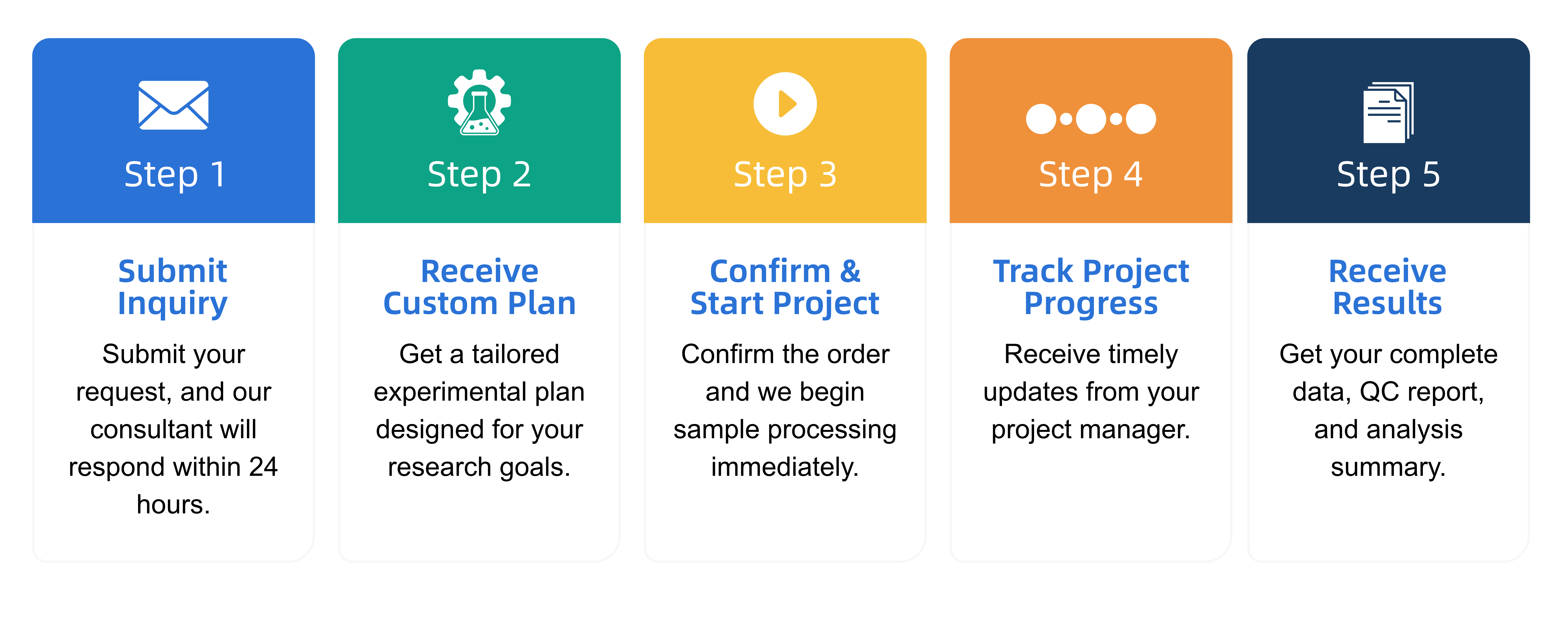
Q3: What is the service general workflow?