
MtoZ Biolabs offers a Cell Surface Proteomics Service that combines selective surface labeling with high-resolution LC-MS/MS to profile outer membrane proteins of cells with high precision. This service supports clinical and translational research in target discovery, immunology, oncology, and cell therapy development.
What Is Cell Surface Proteomics?
Cell surface proteomics focuses on the systematic identification and quantification of proteins exposed on the outer leaflet of the plasma membrane or closely associated with the cell surface. These proteins include receptors, transporters, adhesion molecules, co-receptors, channels, and shed ectodomains that mediate how cells sense and respond to their environment.
The cell surface proteome plays a central role in:
- Ligand and drug binding
- Immune recognition and checkpoint control
- Cell–cell and cell–matrix interactions
- Signal transduction and differentiation
- Tumor progression and immune escape
Because most therapeutic antibodies, CAR targets, and many small-molecule drugs act at the cell surface, unbiased and quantitative mapping of surface proteins is essential for:
- Discovering new drug and antibody targets
- Characterizing target expression across cell types and disease states
- Comparing healthy versus diseased or treated versus untreated cells
- Understanding mechanisms of resistance, immune evasion, or altered signaling
Cell surface proteomics uses cell-impermeable labeling reagents and enrichment strategies to distinguish genuine surface proteins from abundant intracellular background, then applies mass spectrometry and bioinformatics to generate high-confidence, quantitative readouts.
Cell Surface Proteomics Service at MtoZ Biolabs
MtoZ Biolabs provides a Cell Surface Proteomics Service that uses selective surface labeling combined with high-resolution LC-MS/MS to systematically characterize cell surface proteins. We offer qualitative profiling to identify surface receptors and membrane-associated proteins, quantitative analysis to compare expression across cell types or conditions, targeted proteomics to precisely measure defined surface markers or panels, and PTM analysis to investigate modifications such as glycosylation or phosphorylation on surface proteins. Together, these options support target discovery, mechanism studies, and advanced characterization of cell populations in clinical and translational research.
Workflow of Cell Surface Proteomics Service
1. Sample Preparation
Receiving fresh or frozen cell pellets, assessing viability and cell number, and washing to remove serum proteins.
2. Surface Labeling and Enrichment
Labeling live cells with cell-impermeable reagents, lysing cells, and enriching labeled surface proteins on affinity matrices.
3. LC-MS/MS Detection
Digesting enriched proteins to peptides, performing LC-MS/MS runs for discovery, quantitative, or targeted analysis.
4. Data Processing and Interpretation
Identifying and quantifying surface proteins, performing differential analysis, and annotating pathways and functions.
5. Result Delivery
Providing raw MS data, processed quantitative tables, bioinformatics summaries, figures, and a concise report outlining methods, QC metrics, and key findings.
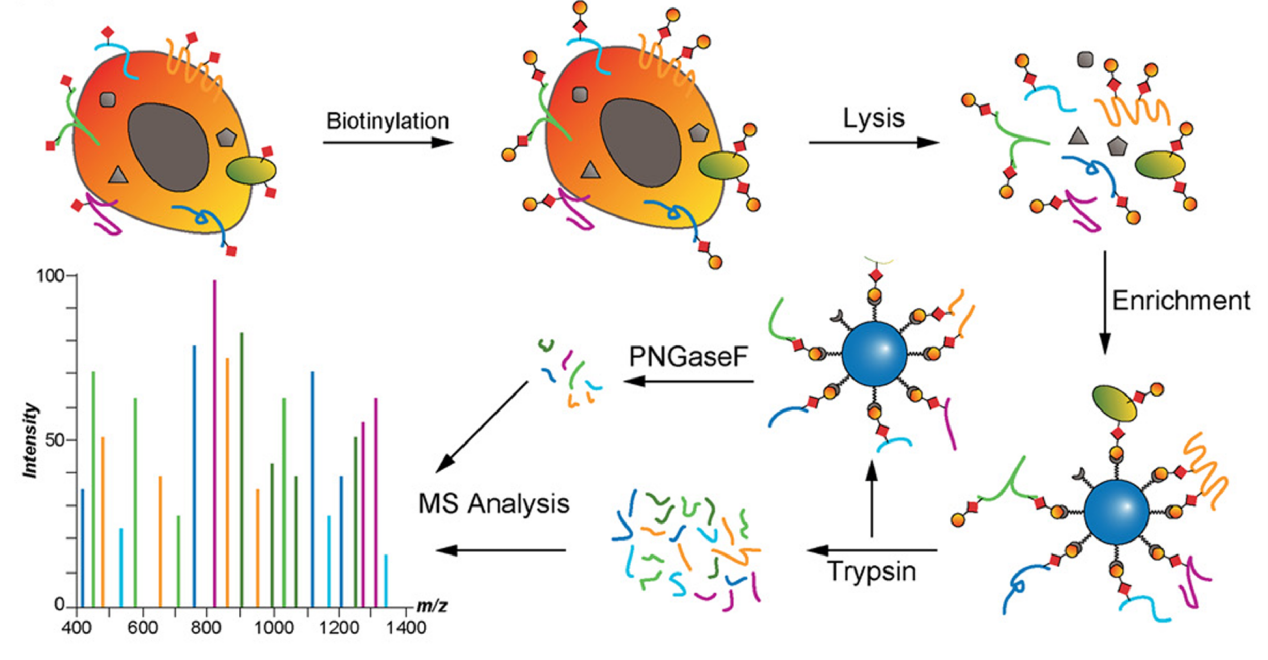
Kalxdorf, M. et al. Mol Cell Proteomics. 2017.
Figure 1. Workflow of Cell Surface Proteomics
Why Choose MtoZ Biolabs
1. High Specificity for Surface Proteins
Enrichment strategies and annotation filters prioritize surface proteins, reducing interference from abundant intracellular species.
2. Quantitative Depth and Sensitivity
High-resolution LC-MS/MS provides sensitive detection and quantification of low-abundance receptors and co-receptors, even in heterogeneous cell populations.
3. Custom Study Design
Discovery-level profiling and targeted follow-up panels can be combined in a single project to move efficiently from broad screens to focused quantitation.
4. Experienced Proteomics Team
Scientists with extensive experience in surface proteomics and clinical proteomics support experimental design and interpret complex datasets.
Applications of Cell Surface Proteomics Service
Cell Surface Proteomics Service at MtoZ Biolabs supports diverse application areas:
1. Target Discovery for Antibodies and Cell Therapies
-
Identify surface antigens for monoclonal antibodies, bispecifics, and CAR constructs
-
Compare expression across tumor versus normal cells or across patient segments
2. Immuno-Oncology and Immune Profiling
-
Characterize immune checkpoint molecules, co-stimulatory and co-inhibitory receptors, and activation markers
-
Profile surface changes in T cells, NK cells, or myeloid cells under stimulation or treatment
3. Biomarker Discovery
-
Discover cell surface protein signatures that distinguish disease states, response profiles, or risk groups
-
Generate candidate markers for flow cytometry, IHC, or other follow-up assays
4. Receptor Signaling and Trafficking Studies
-
Monitor receptor presence at the cell surface under ligand stimulation, inhibitor treatment, or genetic perturbation
-
Support studies of receptor internalization, recycling, or shedding at the proteome level
5. Cell Product Characterization
-
Profile engineered cell products such as CAR-T or TCR-modified cells
-
Assess expression of intended targets, lineage markers, and potential off-target surface molecules in research settings
FAQ
Q1: What types of samples are suitable?
We accept various sample types, including but not limited to:
-
Adherent or suspension cell lines
-
Primary cells from blood, bone marrow, or tissues
-
Engineered cell products (for example, CAR-expressing cells)
-
Cells from animal models for comparative studies
Q2: How should I prepare my samples?
- Provide fresh or frozen cell pellets with recorded cell counts per sample.
- Aim for high viability before pelleting; avoid over-confluent or heavily stressed cultures.
- Wash cells to remove excess serum and debris where feasible.
- Do not add strong detergents, high salts, or reducing agents that can interfere with surface labeling or LC-MS/MS.
- Snap-freeze cell pellets in low-binding tubes and store at −80 °C.
- Ship samples on dry ice with a sample sheet listing cell type and treatment.
For more information, please refer to Sample Submission Guidelines for Proteomics.
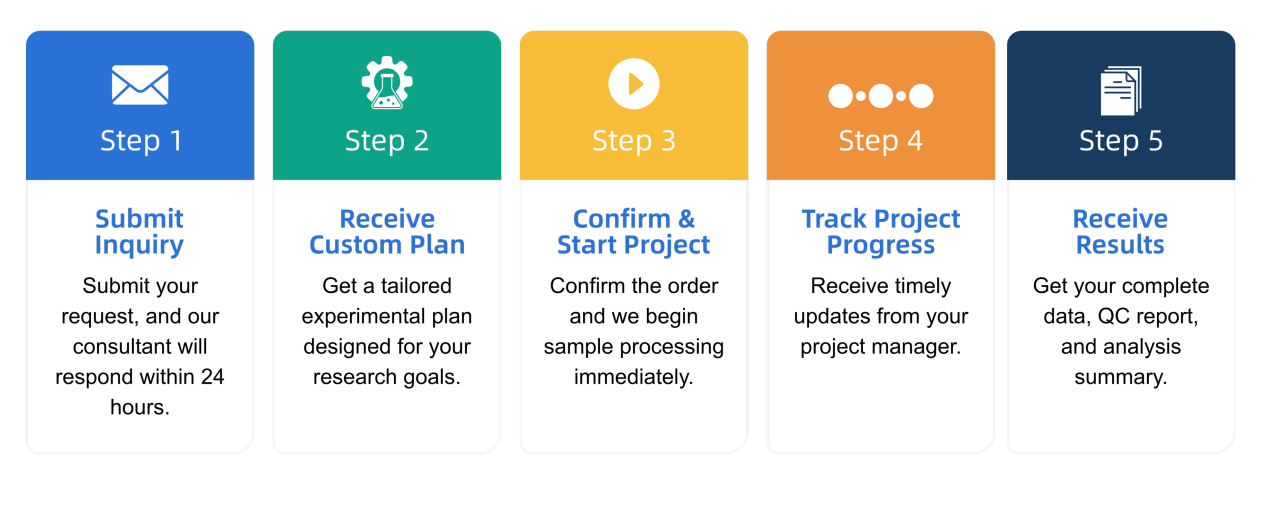
Q3: What is the service general workflow?
Q4: What data formats are provided?
- Raw LC-MS/MS files (for example .raw or instrument-equivalent formats)
- Protein and peptide quantitative tables in .xlsx or .csv
- Bioinformatics outputs such as differential analysis and enrichment summaries in .xlsx or .csv
- Publication-ready figures in high-resolution .png or .tiff
- A concise PDF report describing methods, QC metrics, and key findings
- Additional file formats can be provided on request
Start Your Project with MtoZ Biolabs
MtoZ Biolabs Cell Surface Proteomics Service delivers quantitative, high-confidence maps of surface proteins to accelerate target discovery, biomarker development, and functional cell characterization.
Contact MtoZ Biolabs for a free business assessment to discuss your cell model, study design, and data needs, and begin your cell surface proteomics project with expert support at every step.