
MtoZ Biolabs leverages a high-resolution mass spectrometry platform to launch urine proteomics solutions which enable systematic analysis of protein composition and expression features in urine samples. This service is widely applied to urinary proteome profiling, comparative analysis between samples, and molecular feature characterization, providing stable and reliable data support for urine-related proteomics research.
Overview
Urine proteomics is a research field that focuses on the systematic analysis of protein composition and characteristics in urine samples. As a body fluid filtered by the kidneys and excreted through the urinary system, urine contains proteins that are closely associated with renal filtration and excretion processes, with relatively stable composition and limited external interference. Systematic analysis of urinary proteins facilitates the acquisition of representative molecular features and is widely applied in sample characterization, biomarker discovery, functional association studies, and multi-omics integrative analysis.
Urine Proteomics Solutions at MtoZ Biolabs
MtoZ Biolabs integrates established proteomics analysis technologies to provide protein feature characterization and systematic detection services for urine samples.
-
Comprehensive identification and compositional analysis of urinary proteomes
-
Analysis of specific target proteins or functionally related protein groups in urine samples
-
Evaluation of the relative abundance levels of urinary proteins and their variation trends
-
Comparative analysis of urinary protein features across different sample states or experimental groups
This analysis helps characterize the structural features and dynamic differences of the urinary proteome at a global level, providing researchers with clear and reliable reference data to support in-depth urine-related proteomics studies.
Workflow of Urine Proteomics Solutions
1. Sample Preparation
The collected urine samples are subjected to basic evaluation and processing. Sample volume, storage conditions, and experimental requirements are considered to ensure that the samples are suitable for subsequent proteomics analysis.
2. Protein Enrichment and Preprocessing
Proteins in urine samples are enriched and interfering components are removed to reduce background complexity and improve analytical consistency and detection sensitivity.
3. Proteolytic Digestion and Mass Spectrometry Detection
The processed proteins undergo standardized enzymatic digestion, followed by mass spectrometry analysis to obtain information on the composition and expression characteristics of urinary proteins.
4. Protein Identification and Quantitative Analysis
Based on the acquired data, systematic identification and relative quantification of urinary proteins are performed to characterize feature differences across different samples or conditions.
5. Data Organization and Result Reporting
The analysis results are summarized and interpreted to generate structured datasets and analytical reports, providing reliable support for urine proteomics-related studies.
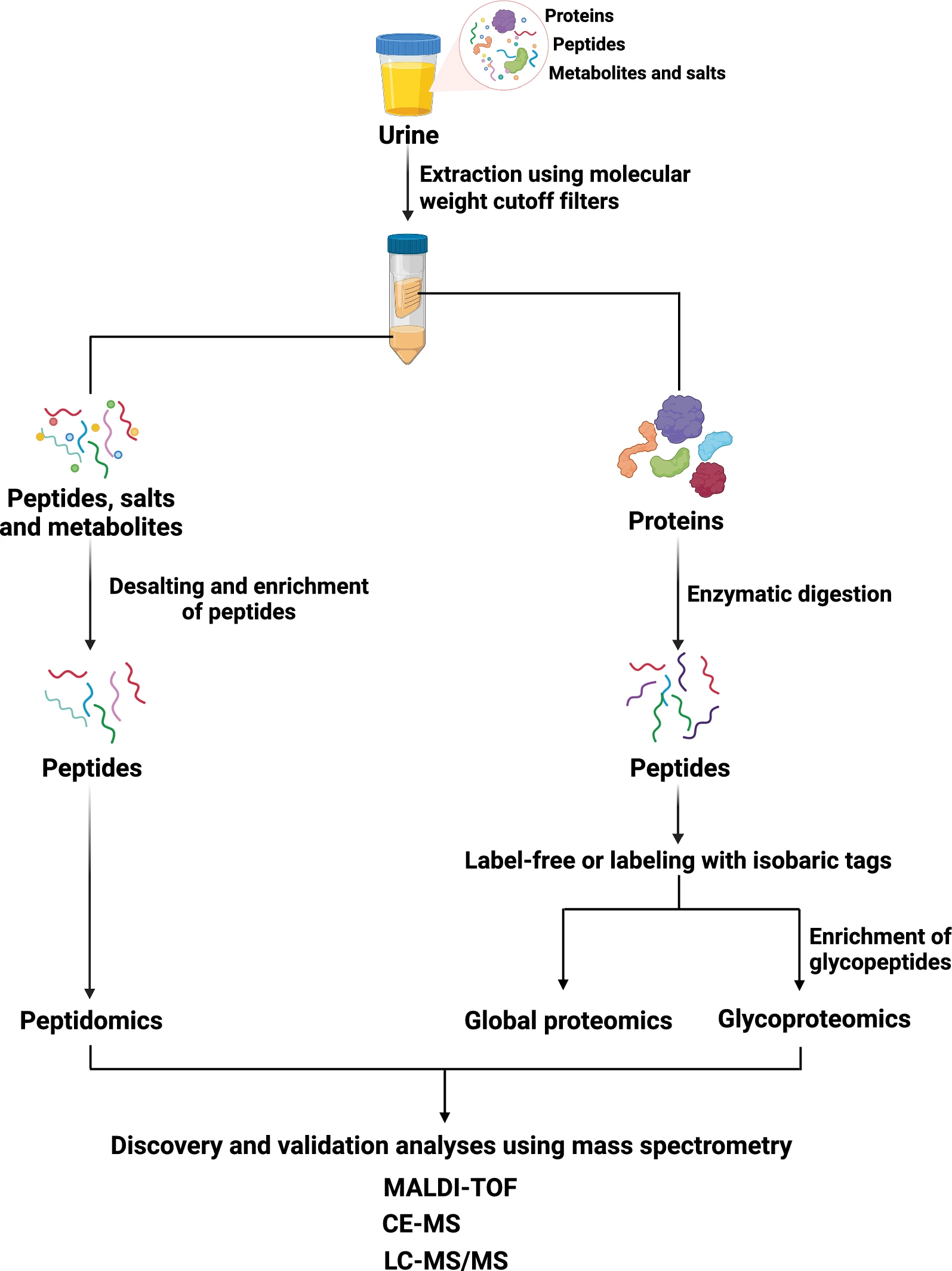
Joshi, N. et al. Clinical Proteomics, 2024.
Figure 1. A Schematic of the Various Analytical Approaches for Urine Proteomics.
Why Choose MtoZ Biolabs?
1. High-Sensitivity Detection
Suitable for the low-protein background of urine samples and facilitates the identification of low-abundance protein features.
2. Optimized Interference Control
Designed to address the complex composition of urine, reducing the impact of salts and impurities on analytical performance.
3. Flexible Analytical Strategies
Qualitative and quantitative analysis schemes can be flexibly combined according to specific research objectives.
4. Stable and Reliable Data
Standardized workflows and quality control systems ensure data consistency and reproducibility.
5. One-Stop Service Support
Covers the entire process from sample evaluation and analysis execution to result delivery, enabling efficient workflow integration.
Applications of Urine Proteomics Solutions
1. Biomarker Discovery
Through systematic analysis of the urinary protein composition, candidate molecules with stable alteration patterns are screened, providing leads for subsequent biomarker-related studies.
2. Signaling Pathway and Regulatory Research
By integrating the expression characteristics of relevant proteins in urine, this approach supports the analysis of molecular distribution and associations at the signaling pathway level.
3. Drug Development and Effect Evaluation
Used to compare changes in urinary proteins under different treatments or intervention conditions, supporting the evaluation of drug effects and response characteristics.
4. Functional Protein and Molecular Feature Analysis
Based on qualitative and quantitative results of urinary proteins, the presence status and variation trends of specific functional proteins are characterized.
5. Support for Multi-Omics Integrated Studies
Serves as an important complement to other omics studies, providing protein-level information for multi-layered and multidimensional integrated biological analyses.
Deliverables
- Comprehensive Experimental Details
- Materials, Instruments, and Methods
- Urinary Protein Identification and Quantitative Analysis Results Tables
- Related Mass Spectrometry Spectra and Visualization Figures
- Bioinformatics Analysis
- Raw Data Files
FAQ
Q1: What types of samples are suitable?
A1: Urine proteomics solutions are suitable for urine samples with clearly defined sources, stable conditions, and no obvious contamination. Samples should avoid hematuria, severe turbidity, or microbial contamination and should exhibit good reproducibility to ensure the reliability and comparability of proteomics analysis results.
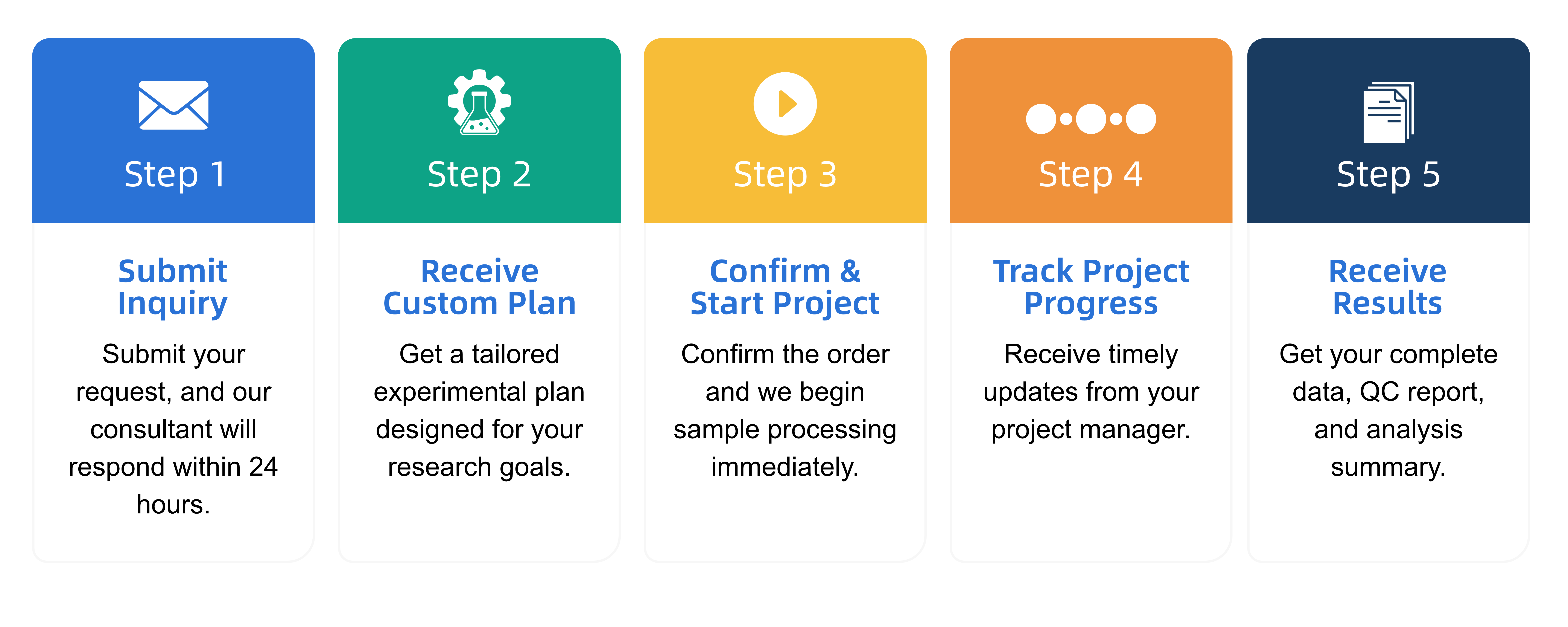
Q2: What is the service general workflow?
A2:
Q3: What data formats are provided?
A3: MtoZ Biolabs provides standardized data deliverables, which typically include:
-
Urinary protein identification and quantitative analysis result tables (Excel/CSV)
-
Related statistical and processed data files
-
Mass spectrometry spectra and visualization figures (PNG/TIFF)
-
Raw mass spectrometry data files
-
Comprehensive analysis report (PDF, including an overview of the analysis workflow and result interpretation)
If special analytical requirements exist, data formats can be customized according to project specifications.
Q4: How should I prepare my samples?
A4: To obtain stable and reproducible analysis results, the following points are recommended:
- Sample Quality: Ensure that urine samples are clear, free of obvious precipitates or exogenous contamination, and perform centrifugation if necessary.
- Sample Storage: Samples may be stored at 4℃ for short-term storage, while -80℃ storage is recommended for long-term preservation, avoiding repeated freeze-thaw cycles.
- Sample Transportation: Transport samples under low-temperature and sealed conditions to prevent protein degradation or compositional changes.
- Additional Information: Providing information on sample collection time, storage conditions, and relevant background details helps optimize the analysis strategy.
For more information, please refer to Sample Submission Guidelines for Proteomics, Sample Submission Guidelines for Metabolomics.
Start Your Project with MtoZ Biolabs
Contact us to discuss your experimental design or request a quote. Whether you aim to systematically understand the overall characteristics of urinary proteins or to conduct more in-depth urine proteomics research, MtoZ Biolabs can provide professional and reliable analytical support.