
MtoZ Biolabs employs high-resolution mass spectrometry platforms to provide the DARTS assay service which is used to analyze changes in protein stability induced by the binding of small molecules to proteins. This service is applicable to drug target screening and mechanism-of-action studies, providing reliable data support for protein-small molecule interaction analysis.
What Is DARTS?
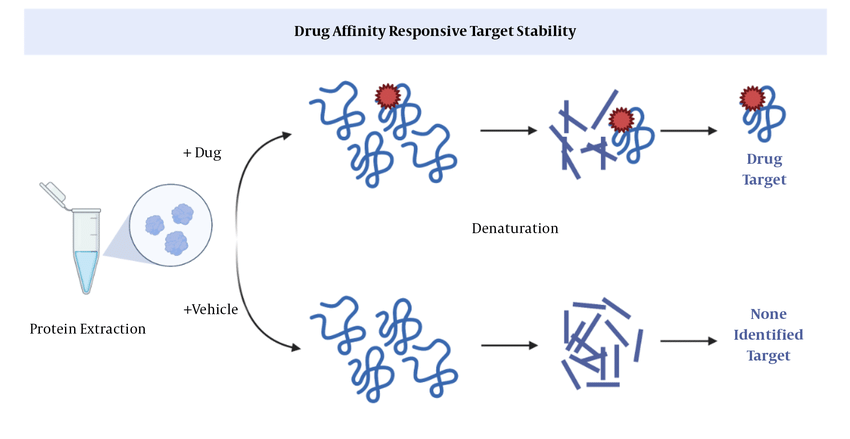
Drug affinity responsive target stability (DARTS) is an analytical method based on the principle that ligand binding can increase the resistance of target proteins to proteolytic degradation, and is used to identify direct interactions between small molecules and proteins. This method does not require labeling of either the compound or the protein and can be performed under near-native conditions. DARTS has important applications in drug target screening, mechanism-of-action studies, and compound functional validation.
Gholizadeh, E. et al. Middle East Journal of Rehabilitation and Health Studies, 2021.
Figure 1. Drug Affinity Responsive Target Stability (DARTS).
DARTS Assay Service at MtoZ Biolabs
MtoZ Biolabs leverages mass spectrometry-based DARTS technology to provide analysis and validation services for interactions between small-molecule compounds and potential target proteins.
-
Evaluation of changes in target protein stability against proteolytic degradation following compound binding
-
Assistance in identifying candidate proteins that may directly interact with small molecules
-
Comparison of protein stability differences under different treatment conditions
-
Support for screening protein-small molecule interactions in complex biological systems
This analysis provides a comprehensive understanding of small-molecule targets and interaction characteristics, helping researchers further advance target discovery and functional studies.
Workflow of DARTS Assay Service
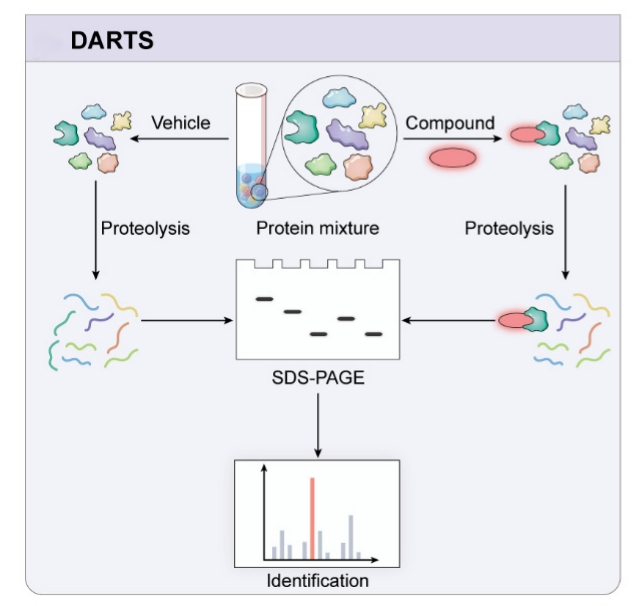
1. Sample Preparation and Incubation
Target proteins or complex biological samples are processed and incubated with the small-molecule compounds of interest to allow potential binding interactions to occur.
2. Controlled Protease Digestion
Limited protease digestion is performed under optimized conditions, with digestion strength carefully controlled to preserve protein stability difference signals.
3. SDS-PAGE Separation and Stability Assessment (Optional)
Digestion products are separated by SDS-PAGE, and protein stability differences are evaluated by comparing band patterns to preliminarily identify candidate proteins.
4. Mass Spectrometry Analysis and Protein Identification
Target bands or relevant samples are subjected to mass spectrometry analysis and protein identification to obtain protein information and quantitative or semi-quantitative evidence associated with stability changes.
5. Result Screening and Delivery
Data from treated and control groups are integrated to screen potential binding proteins, and structured results and analysis reports are generated.
Xie, S W. et al. Expert Opinion on Drug Discovery, 2024.
Figure 2. The Workflow of DARTS.
Why Choose MtoZ Biolabs?
1. Label-Free Detection
Does not require modification of compounds or proteins, allowing analysis under near-native conditions.
2. High Sensitivity
Capable of detecting subtle protein stability changes induced by small-molecule binding.
3. High-Throughput Analysis
Integrated with mass spectrometry platforms to support parallel screening of multiple samples for potential target proteins.
4. Low Background Interference
Control-based comparison strategies effectively reduce nonspecific signal interference.
5. Customized Strategies
Experimental conditions can be flexibly optimized according to compound properties and research objectives.
Applications of DARTS Assay Service
1. Drug Target Discovery and Validation
Used to screen and confirm potential target proteins that may directly bind small-molecule compounds in complex biological systems, providing experimental evidence for target research.
2. Mechanism-of-Action and Binding Mode Studies
By analyzing protein stability changes before and after compound treatment, this approach assists in elucidating binding characteristics and modes of action between proteins and small molecules.
3. Lead Compound Screening and Structural Optimization Support
Supports comparative analysis of different compounds or structural analogs to help evaluate differences in their interactions with proteins.
4. Protein Function and Regulatory Studies
Applied to explore protein stability changes following small-molecule binding and their potential functional relevance.
5. Pathway-Related Protein Screening
Assists in identifying potential target proteins associated with specific biological processes or signaling pathways, supporting pathway-level investigations.
Deliverables
- Comprehensive Experimental Details
- Materials, Instruments, and Methods
- Protein stability change analysis results
- Key result visualization figures
- Bioinformatics Analysis
- Raw Data Files
FAQ
Q1: What types of samples are suitable?
A1: The DARTS assay service is suitable for samples containing potential target proteins, including purified proteins, cell lysates, or other complex biological samples. Samples should maintain good protein integrity and avoid severe degradation or contamination to meet the requirements for protein stability analysis.
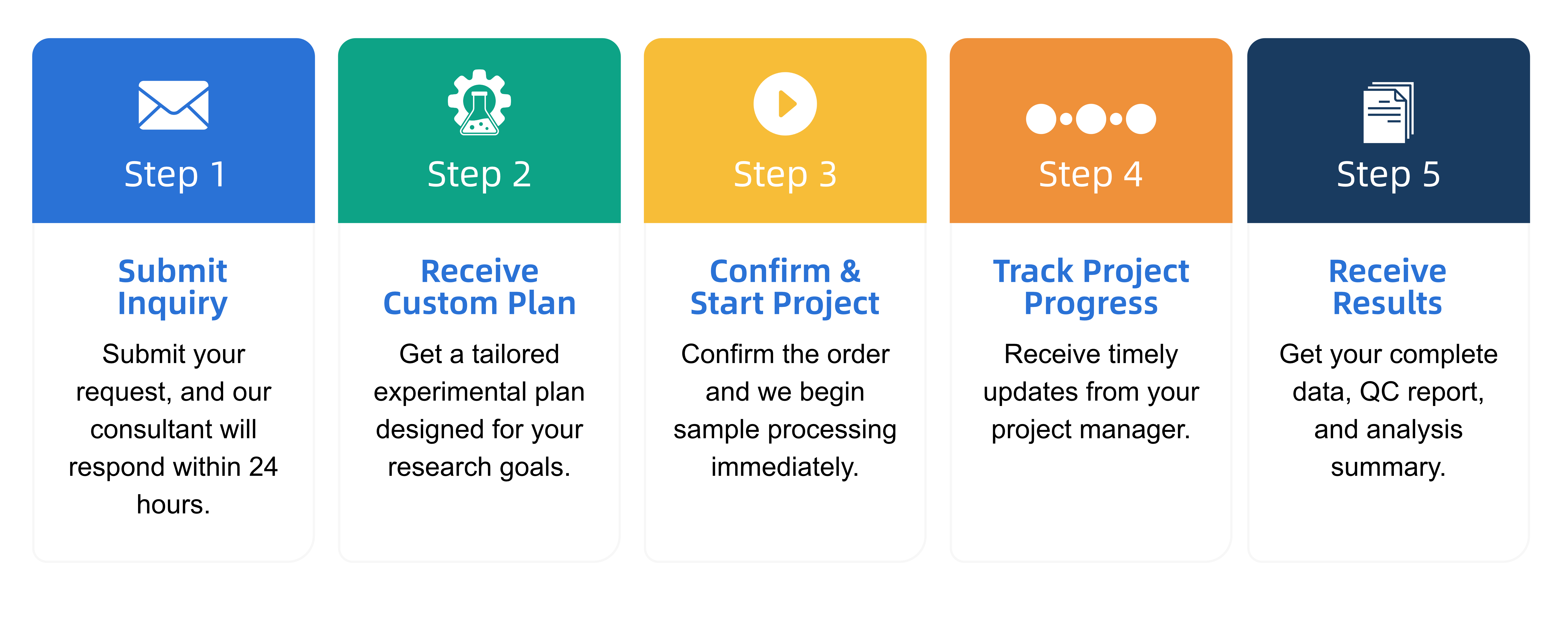
Q2: What is the service general workflow?
A2:
Q3: What data formats are provided?
A3: MtoZ Biolabs provides multiple types of standardized deliverables, including:
- Protein stability change analysis results
- Screening data for potential binding proteins
- Visualized result figures
- Raw and processed detection data files
- Brief analysis summary
If special analytical requirements exist, data formats can be customized according to project specifications.
Q4: How should I prepare my samples?
A4: To ensure optimal analytical performance, sample preparation is recommended in the following aspects:
- Sample Purity: Ensure clear sample origin and avoid obvious impurities or protein degradation.
- Sample Storage: Samples should be stored at low temperature and protected from repeated freeze-thaw cycles to maintain protein stability.
- Sample Transport: Samples should be transported under low-temperature and sealed conditions to prevent sample deterioration.
- Additional Information: Providing sample type, treatment conditions, and compound-related information will help optimize the experimental design.
For more information, please refer to Sample Submission Guidelines for Proteomics, Sample Submission Guidelines for Metabolomics.
Start Your Project with MtoZ Biolabs
Contact us to discuss your experimental design or request a quote. Whether you are exploring potential binding relationships between small molecules and proteins or conducting related target studies, we can provide professional and reliable analytical support.