
MtoZ Biolabs provides specialized Plant Single-Cell Proteomics Service to enable protein-level analysis at single-cell resolution in plant systems. By integrating controlled single-cell preparation with high-sensitivity mass spectrometry, this service supports qualitative and quantitative characterization of proteins from individual plant cells, enabling cell-type-resolved investigation of complex plant tissues.
What Is Plant Single-Cell Proteomics?
Plant tissues are composed of diverse cell types that differ in developmental state, metabolic activity, and regulatory programs. Bulk proteomics averages protein signals across mixed populations, which can obscure cell-specific regulatory features. Plant single-cell proteomics directly measures protein expression within individual cells, providing functional insight that complements transcript-based single-cell approaches.
Because proteins represent the functional output of gene regulation, single-cell proteomics is particularly valuable for studying plant development, differentiation, and stress responses, where post-transcriptional regulation and protein-level control play critical roles.
Plant Single-Cell Proteomics Service at MtoZ Biolabs
MtoZ Biolabs provides a structured Plant Single-Cell Proteomics Service covering single-cell isolation, low-input proteomics processing, and quantitative mass spectrometry analysis. The service supports protein profiling at the level of individual plant cells or defined small cell populations.
1. Single-Cell Isolation and Selection
Plant single cells or nuclei are obtained using tissue-adapted dissociation strategies. Cell isolation can be performed by fluorescence-activated cell sorting (FACS) or microfluidic-based platforms, enabling either unbiased single-cell collection or targeted selection of specific cell types.
2. Low-Input Proteomics Sample Preparation
Protein extraction and enzymatic digestion workflows are designed for single cells or limited cell numbers. These procedures ensure reproducible peptide generation while remaining compatible with plant-derived samples containing polysaccharides and secondary metabolites.
3. Quantitative Proteomics Approaches
Quantitative analysis can be performed using multiplexed labeling strategies such as Tandem Mass Tag (TMT) labeling, or label-free quantification methods. The selection of the quantitative strategy is based on experimental design, sample throughput requirements, and comparison objectives.
4. LC-MS/MS-Based Proteomic Analysis
Peptide samples are analyzed using LC-MS/MS-based proteomics workflows to enable protein identification and quantitative comparison across individual cells, cell populations, or experimental conditions.
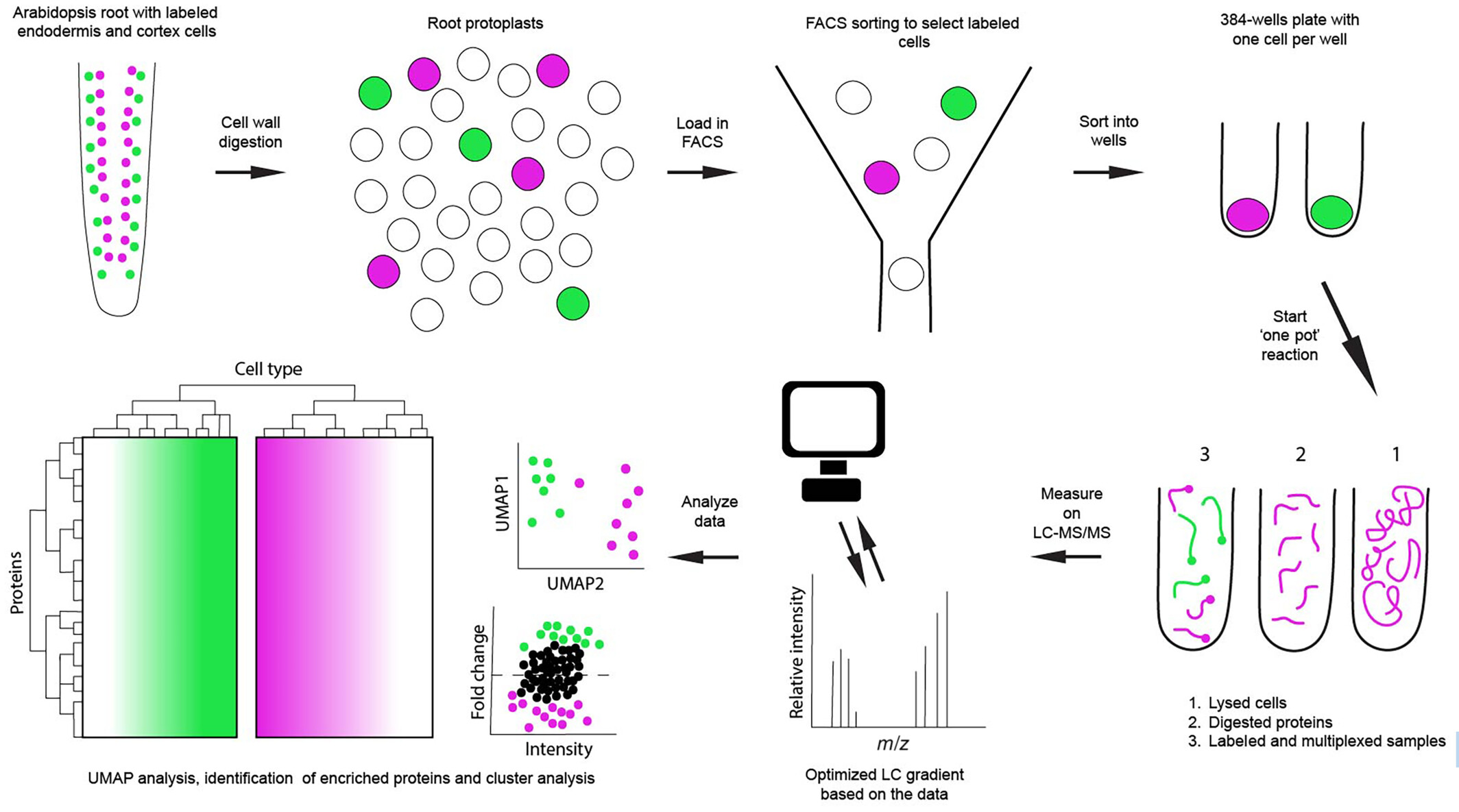
Schie, M. et al. New Phytol. 2024.
Figure 1. Workflow of Plant Single-Cell Proteomics
Why Choose MtoZ Biolabs?
1. Single-Cell Proteomics Expertise
Proven experience in low-input and single-cell proteomics workflows for plant systems.
2. Flexible Cell Isolation Strategies
Support for both unbiased and targeted single-cell or nuclei selection.
3. Quantitative Proteomics Capability
Multiplexed and label-free strategies tailored to experimental design.
4. High-Sensitivity Mass Spectrometry Platforms
Reliable protein detection across individual cells.
5. One-Time-Charge
Our pricing is transparent, no hidden fees or additional costs.
Applications of Plant Single-Cell Proteomics Service
- Cell-type-specific functional characterization
- Developmental and differentiation studies
- Stress and environmental response analysis
- Rare or transient cell population profiling
- Protein-level regulatory and signaling network analysis
Start Your Project with MtoZ Biolabs
MtoZ Biolabs combines advanced mass spectrometry platforms with plant proteomics expertise to deliver reliable single-cell protein datasets. Contact us to discuss your tissue type, cell numbers, and analytical objectives so we can recommend an appropriate project design.
FAQ
Q1: What types of samples are suitable?
This service is suitable for isolated single plant cells or high-quality single-cell suspensions derived from tissues such as roots, leaves, vascular tissues, or meristems.
Q2: How should I prepare my samples?
Single-cell samples should be prepared to preserve protein integrity, kept under cold conditions, and free of debris or excessive contaminants. Avoid harsh treatments and repeated freeze-thaw cycles.
For more information, please refer to Sample Submission Guidelines for Proteomics. If you are unsure about sample preparation, our team is available for consultation and can guide you through the process to ensure optimal results.
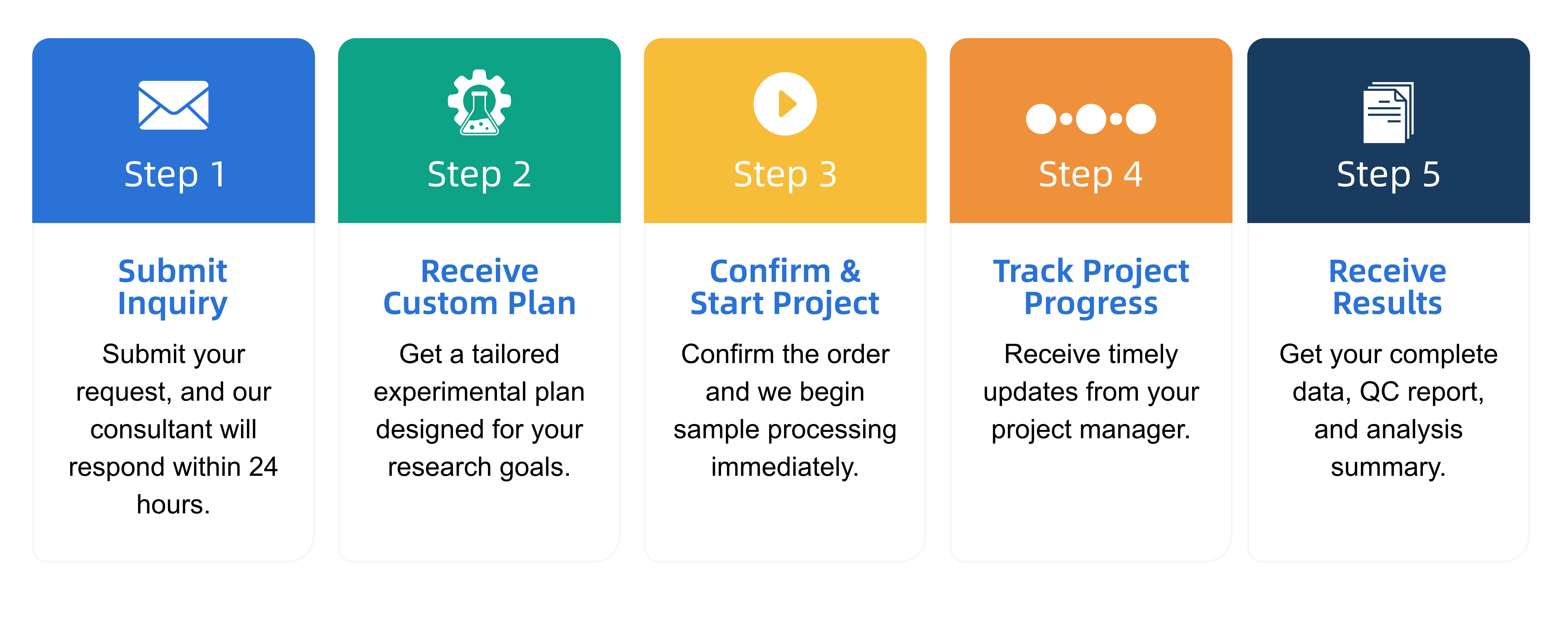
Q3: What is the service general workflow?
Q4: What data formats are provided?
Deliverables include raw LC-MS/MS data files, protein identification and quantitative tables in Excel or CSV format, single-cell comparison and clustering results when applicable, and a comprehensive PDF report describing methods, quality control, and biological interpretation. High-quality figures are provided in PNG or TIFF format.
Customized data formats or publication-ready outputs can be provided upon request to meet specific research or journal requirements.