
MtoZ Biolabs provides Skin Proteomics Solutions that apply advanced quantitative proteomics, DIA MS-based discovery proteomics workflows, and targeted verification strategies to analyze protein expression, signaling pathways, and molecular alterations in skin samples.
Background
Skin is the largest organ of the human body and serves as a critical interface between the internal environment and external exposures. It is involved in barrier function, immune defense, wound repair, inflammation, hydration balance, and sensory perception. These complex biological processes are regulated by thousands of proteins distributed across the epidermis, dermis, appendages, immune cells, and extracellular matrix. Changes in protein composition and abundance often reflect underlying pathological conditions, environmental damage, therapeutic responses, aging, or genetic variation.
Skin proteomics uses high resolution mass spectrometry to systematically identify and quantify proteins, peptides, and post translational modifications in skin tissues, biopsies, keratinocytes, fibroblasts, stratum corneum samples, skin surface lipids, and skin derived fluids. These molecular profiles provide a detailed map of the biological mechanisms that shape skin health and disease. Skin proteomics is increasingly used in dermatology, cosmetic science, wound healing research, inflammation studies, drug development, and precision medicine.
Skin Proteomics Solutions at MtoZ Biolabs
MtoZ Biolabs provides a high performance Skin Proteomics Solution built on DIA MS for deep and consistent protein quantification. Our optimized DIA workflows on high resolution instruments enable broad proteome coverage and stable measurement across complex skin samples. A single injection generates both identification and quantitative data, supporting efficient large scale analysis.
We can quantify thousands of proteins across large cohorts and offer targeted proteomics options for focused biomarker panels, including absolute quantification when required. These integrated workflows allow researchers to assess disease mechanisms, treatment effects, and molecular changes with high confidence. You only need to submit your samples, and we manage every stage including extraction, digestion, LC-MS acquisition, data processing, and interpretation.
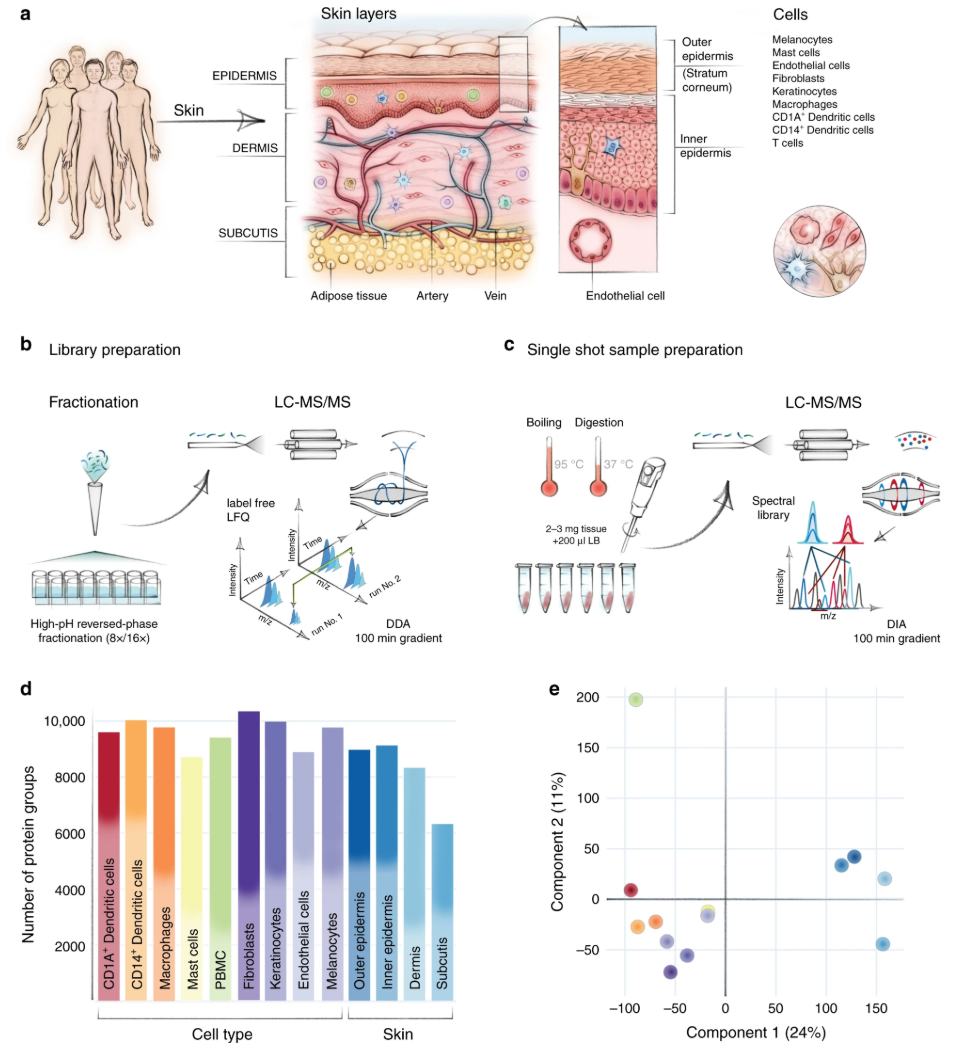
Dyring-Andersen B. et al. Nat Commun. 2020.
Figure 1. In-Depth MS-Based Proteomic Analysis of Skin
Why Choose MtoZ Biolabs
- High resolution LC-MS systems provide deep skin proteome coverage and accurate quantification.
- Customizable workflows accommodate different sample types including biopsies, epidermal layers, dermal tissues, cultured cells, and surface lipids.
- Specialized extraction strategies overcome challenges presented by dense extracellular matrix and lipid rich components.
- High throughput capacity supports large experimental cohorts and multi timepoint studies.
- Strict QC procedures deliver reproducible results with high sensitivity.
- Expert data analysis provides clear biological interpretation and actionable insights.
Applications of Skin Proteomics Solutions
1. Dermatological Disease Research
Proteomic profiling supports studies on psoriasis, atopic dermatitis, acne, vitiligo, eczema, and chronic inflammatory skin diseases.
2. Skin Aging and Regeneration
Protein signatures reveal molecular pathways involved in photoaging, intrinsic aging, collagen loss, elastin remodeling, and regenerative processes.
3. Cosmetic and Personal Care Evaluation
Proteins that regulate hydration, barrier integrity, keratinocyte function, and antioxidant defense help assess product efficacy and mechanism.
4. Wound Healing and Tissue Repair
Skin proteomics identifies factors involved in inflammation, angiogenesis, extracellular matrix restructuring, and immune responses.
5. Drug Development and Safety Assessment
Proteomic data reveal pharmacodynamic effects, off target responses, tissue penetration, and biological impact of topical or systemic therapeutics.
6. Biomarker Discovery and Validation
DIA based discovery and targeted PRM allow identification and confirmation of biomarkers for diagnosis, classification, or treatment monitoring.
FAQ
Q1: What types of samples are suitable?
We accept various sample types, including:
-
Fresh or frozen skin biopsies
-
Epidermal or dermal layers
-
Keratinocytes or fibroblast cultures
-
Stratum corneum tape strips
-
Skin surface lipids or wash fluids
Q2: How should I prepare my samples?
Skin biopsies, epidermal or dermal layers, and cultured skin cells should be frozen immediately after collection and stored at minus 80 degrees Celsius. Avoid repeated freeze thaw cycles and remove excessive surface debris when applicable. No complex preprocessing is required. Simply provide the samples, and our team will complete all downstream preparation.
Q3: What is the service general workflow?

Q4: What data formats are provided?
- Raw mass spectrometry files such as .raw, .d, or .wiff
- Quantitative result tables in .xlsx or .csv, covering protein intensity, statistical scores, and annotations
- Bioinformatics analysis outputs (pathway enrichment, protein networks, functional scoring) delivered in .xlsx or .csv
- Publication-ready figures in high-resolution .png or .tiff formats
- A complete PDF report summarizing experimental methods, QC metrics, and key proteomic insights
- Additional file formats are available on request
Start Your Project with MtoZ Biolabs
MtoZ Biolabs' Skin Proteomics Solutions enable researchers to reveal molecular mechanisms, identify novel biomarkers, and develop translational insights for dermatology, cosmetic science, and clinical research.
If you are ready to begin your skin proteomics project or need guidance on experimental design, our team of specialists is available to assist.