
MtoZ Biolabs provides mass spectrometry-based proteomics solutions to support biomedical research from fundamental mechanism studies to translational and preclinical projects. Our services help scientists characterize protein expression, post translational modifications, and signaling networks for disease mechanism research, molecular diagnostics, biomarker discovery, and drug target evaluation.
Proteomics in Biomedical Research
Proteins are the direct effectors of cellular function and the key readouts of disease biology. While genomics and transcriptomics describe potential, proteomics reveals what is actually happening at the level of protein abundance, post translational modifications, protein complexes, and signaling networks in real biological samples. For biomedical research, proteomics has become a central tool to connect molecular changes with disease phenotypes and treatment responses.
Our proteomics services for biomedical research span discovery scale profiling and targeted validation. From early exploratory projects to late stage translational studies, MtoZ Biolabs supports end to end proteomics solutions that are compatible with diverse sample types including tissues, biofluids, cell lines, organoids, and patient derived samples.
1. Disease Mechanism and Pathway Analysis
Using global quantitative proteomics (label free, DIA, TMT) and PTM profiling, MtoZ Biolabs maps differentially expressed proteins and perturbed signaling pathways under disease versus control, treatment versus baseline, or model comparisons to clarify molecular mechanisms.
2. Molecular Diagnostics and Disease Stratification
High throughput DIA and targeted proteomics of tissues and biofluids support the identification and quantitative comparison of protein signatures linked to disease stages, risk groups, and clinical outcomes, enabling research on molecular subtypes and stratified patient cohorts.
3. Biomarker Discovery and Validation
Discovery proteomics combined with follow up targeted assays allows systematic screening, prioritization, and verification of candidate diagnostic, prognostic, and predictive biomarkers, helping to build robust protein panels for future translational development.
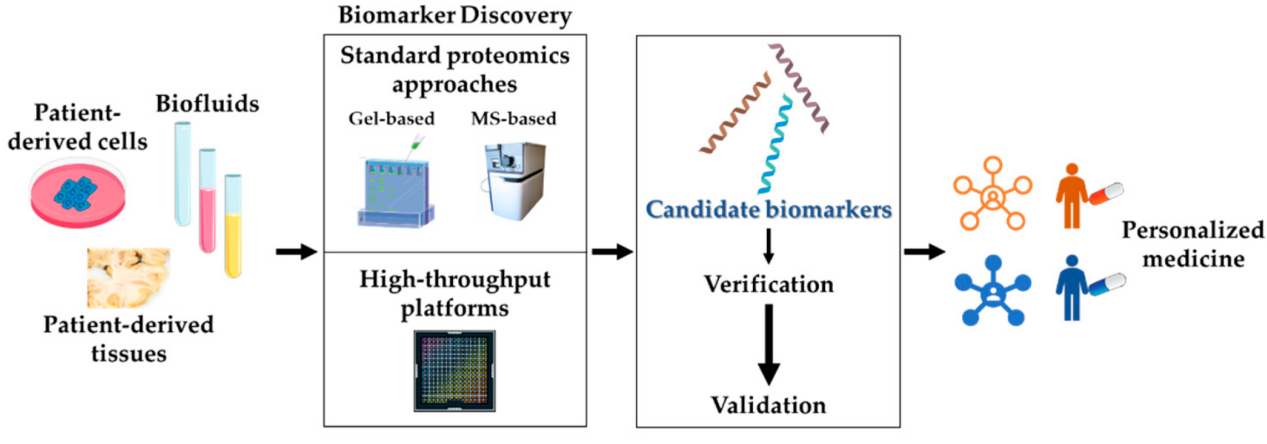
Alberio T. et al. Biomedicines. 2022.
Figure 1. Biomarker Discovery by Proteomics
4. Drug Target and Mechanism of Action Profiling
Quantitative proteomics and phosphoproteomics characterize how candidate drugs modulate targets and downstream pathways, revealing on target engagement, adaptive responses, and potential off target effects in cells, organoids, tissues, or in vivo models.
Service at MtoZ Biolabs
1. Qualitative Proteomics
LC MS/MS based identification of proteins and peptides, including de novo and database supported sequencing, protein ID confirmation, purity assessment, molecular weight determination, and analysis of protein–protein interactions and complexes.
2. Quantitative Proteomics
Differential expression and comparative profiling using label-free workflows, TMT and iTRAQ multiplexing, and SILAC based metabolic labeling, suitable for multi group designs, time course studies, and clinical or preclinical cohorts.
3. Targeted Proteomics
High specificity quantification of predefined protein panels or biomarkers using SRM and MRM assays, supporting assay development, verification of discovery candidates, and longitudinal monitoring of key pathways.
4. Post Translational Modification (PTM) Proteomics
Qualitative and quantitative mapping of PTMs such as phosphorylation, acetylation, ubiquitination, glycosylation, and others, integrating enrichment strategies with high resolution LC MS/MS to characterize site occupancy, regulation, and pathway level effects.
Our proteomics solutions for biomedical research can be applied across a wide range of fields, including but not limited to:
- Cancer Research
- Inflammatory Diseases Research
- Neuroproteomics Research
Why Choose MtoZ Biolabs
1. Dedicated Biomedical Focus
Extensive experience with disease related proteomics in oncology, neurology, immunology, cardiometabolic research, infectious disease, and regenerative medicine.
2. Comprehensive Technology Portfolio
Integrated LC-MS-based workflows covering discovery proteomics, post translational modification mapping, 4D proteome profiling, label free and multiplexed (TMT, iTRAQ, SILAC) studies, DIA family methods, and targeted PRM SRM assays for in depth protein characterization and validation.
3. High Quality and Reproducibility
Standardized protocols, internal controls, and QC at each step to support reliable comparisons within and across batches.
4. Flexible and Customizable Solutions
Workflows, depth of analysis, and reporting formats tailored to exploratory discovery, focused pathway studies, or preclinical style projects.
5. Collaborative Project Management
Clear communication channels, project updates, and technical support to help you move from samples to actionable biological insight efficiently.
FAQ
Q1: What types of samples are suitable?
We support a wide range of biomedical proteomics samples, including but not limited to:
-
Fresh or frozen tissues from human and animal
-
FFPE tissue sections or curls
-
Biofluids such as plasma, serum, CSF, urine, saliva, and synovial fluid
-
Cultured cell lines, primary cells, and organoids
-
Isolated protein complexes or purified proteins
If you have other sample types, you can contact us for feasibility evaluation.
Q2: How should I prepare my samples?
- Use freshly collected or snap frozen tissues and biofluids whenever possible
- Avoid repeated freeze thaw cycles that may cause protein degradation
- Minimize detergents, salts, and chaotropes that interfere with LC-MS analysis
- Store samples at −80 °C and ship on dry ice
For more information, please refer to Sample Submission Guidelines for Proteomics.
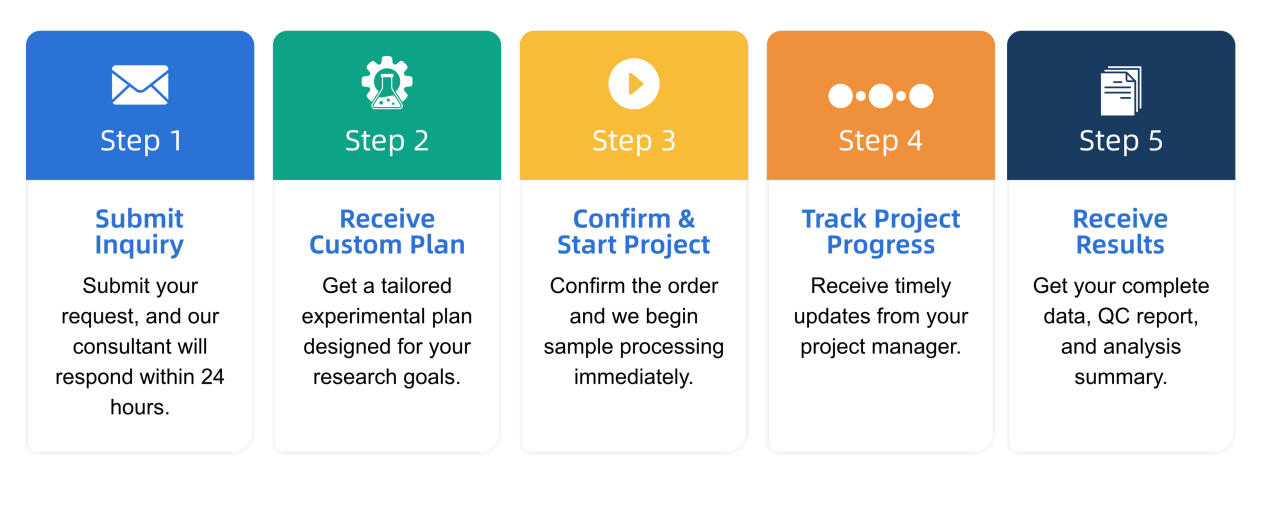
Q3: What is the service general workflow?
Q4: What data formats are provided?
- Raw mass spectrometry files in instrument specific formats such as .raw, .wiff, or .d
- Qualitative identification and quantitative result tables in Excel or CSV
- Bioinformatics outputs such as GO and pathway enrichment, clustering, and network summaries in spreadsheet formats
- Publication ready figures, for example heatmaps, volcano plots, PCA and clustering plots, in high resolution PNG or TIFF
- A structured PDF report summarizing experimental design, workflow, QC metrics, key qualitative and quantitative findings, and biological interpretation
- Additional formats or customized deliverables can be provided on request
Start Your Project with MtoZ Biolabs
Whether you are dissecting disease mechanisms, developing biomarker candidates, or characterizing drug targets, MtoZ Biolabs can help you design and execute robust proteomics strategies for biomedical research.
Contact us to discuss your study goals, sample types, and timelines, and our scientific team will propose an optimized workflow and provide a detailed quotation.