
MtoZ Biolabs offers Plant Post-Translational Modifications Proteomics Service to support comprehensive investigation of protein modification landscapes in plant systems. This service enables large-scale identification and quantitative profiling of post-translational modifications across plant proteomes, providing critical insights into how protein modifications regulate plant growth, development, metabolism, and responses to environmental cues.
Overview
Plant post-translational modifications form a complex and interconnected regulatory network that governs protein function beyond primary sequence information. At a high level, plant PTMs include chemical group-based modifications, protein conjugation-based modifications, complex molecular modifications, and other amino acid-level covalent alterations. These different modification classes coexist and interact, allowing plants to fine-tune protein activity, stability, localization, and interaction networks in response to developmental cues and environmental changes.
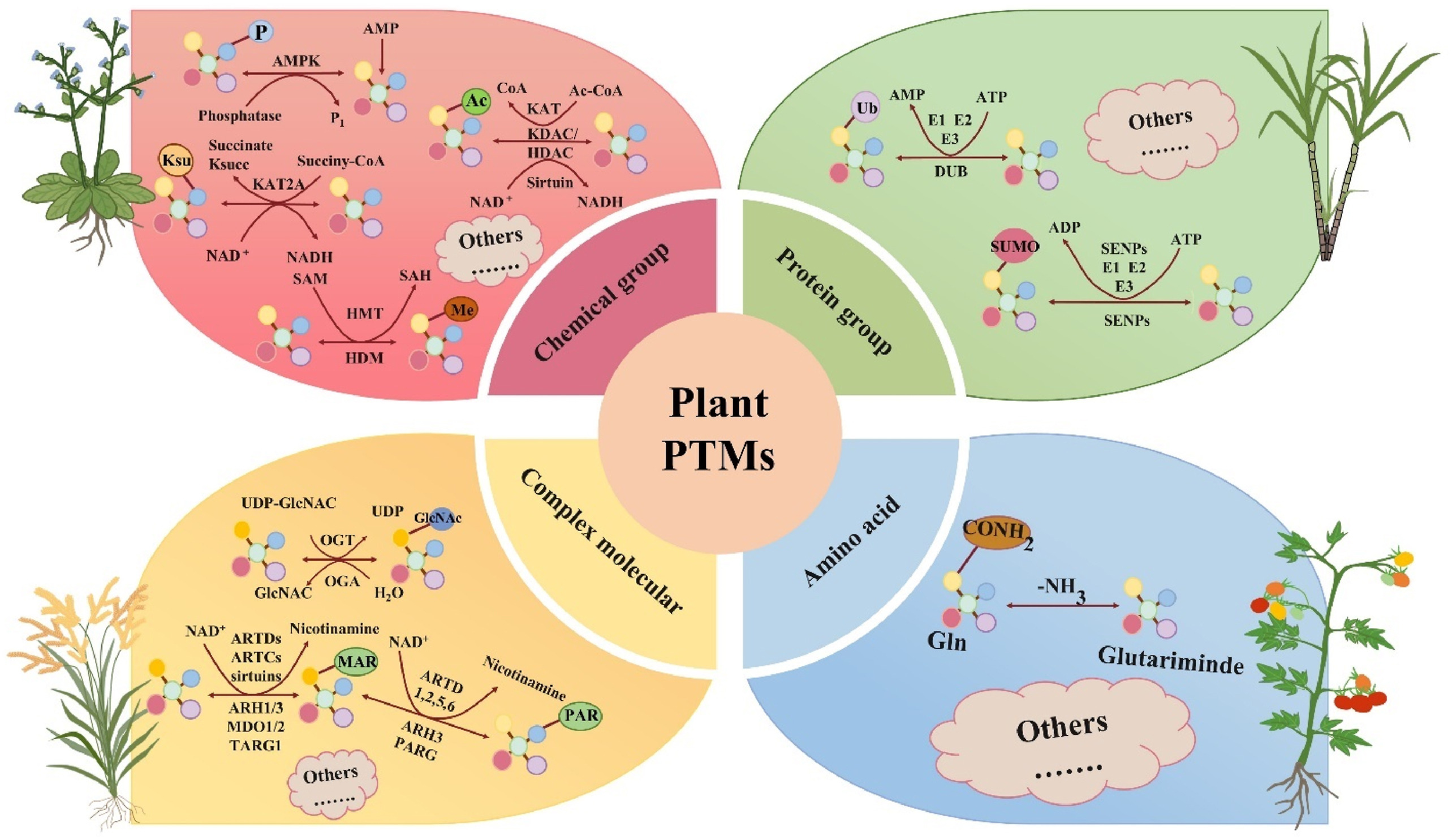
Li, Z. et al. Hortic. Plant J. 2025.
Figure 1. Plant Post-Translational Modifications
Plant PTM proteomics aims to capture this regulatory landscape at a system-wide scale, providing a global view of how multiple modification types collectively shape plant protein function under different biological conditions.
Plant Post-Translational Modifications Proteomics Service at MtoZ Biolabs
MtoZ Biolabs offers a comprehensive portfolio of plant PTM proteomics services. Clients may select individual PTM analysis services or combine multiple services depending on research objectives.
Available sub-services include:
- Phosphorylated Plant Proteome Analysis Service
- Acetylated Plant Proteome Analysis Service
- Ubiquitinated Plant Proteome Analysis Service
- Glycosylated Plant Proteome Analysis Service
- Methylated Plant Proteome Analysis Service
- Plant Proteins Disulfide Bond Identification Service
- Plant Histone Post-Translational Modification Analysis Service
- Plant Proteins SUMOylation Detection Service
Each sub-service is supported by PTM-specific enrichment strategies, high-resolution LC-MS/MS analysis, and dedicated bioinformatics workflows tailored to plant samples.
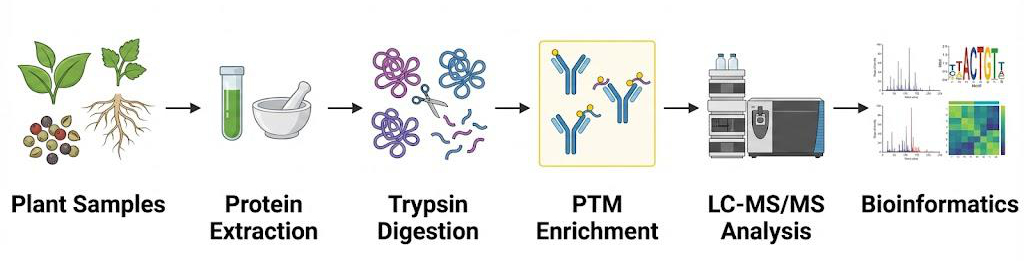
Figure 2. Workflow of Plant Post-Translational Modifications Proteomics
Why Choose MtoZ Biolabs?
✔ Expertise in Plant Proteomics: Extensive experience in handling plant tissues and complex proteomes.
✔ Broad PTM Coverage: Ability to profile multiple PTM types within a unified proteomics framework.
✔ High-Resolution Site-Level Analysis: Accurate identification and localization of modification sites across the plant proteome.
✔ Flexible Experimental Design: Suitable for both global discovery studies and condition-based comparative analyses.
✔ One-Time-Charge: Our pricing is transparent, no hidden fees or additional costs.
Applications of Plant Post-Translational Modifications Proteomics Service
· Plant signal transduction and regulatory network analysis
· Stress response and environmental adaptation studies
· Developmental and tissue-specific regulation research
· Epigenetic and chromatin-associated protein modification studies
· Hormone signaling and metabolic pathway regulation
· Functional genomics and crop trait research
Start Your Project with MtoZ Biolabs
MtoZ Biolabs delivers reliable and scalable plant post-translational modifications proteomics solutions to support plant biology, regulatory research, and functional genomics. Contact us to discuss your research goals or to identify the most appropriate PTM analysis strategy for your project.
FAQ
Q1: What types of samples are suitable?
We accept a wide range of plant-derived samples, including leaves, roots, stems, seedlings, flowers, and seeds, as well as plant cell cultures and suspension cells. Samples collected across different developmental stages or treatment conditions are suitable.
Q2: What is the service general workflow?
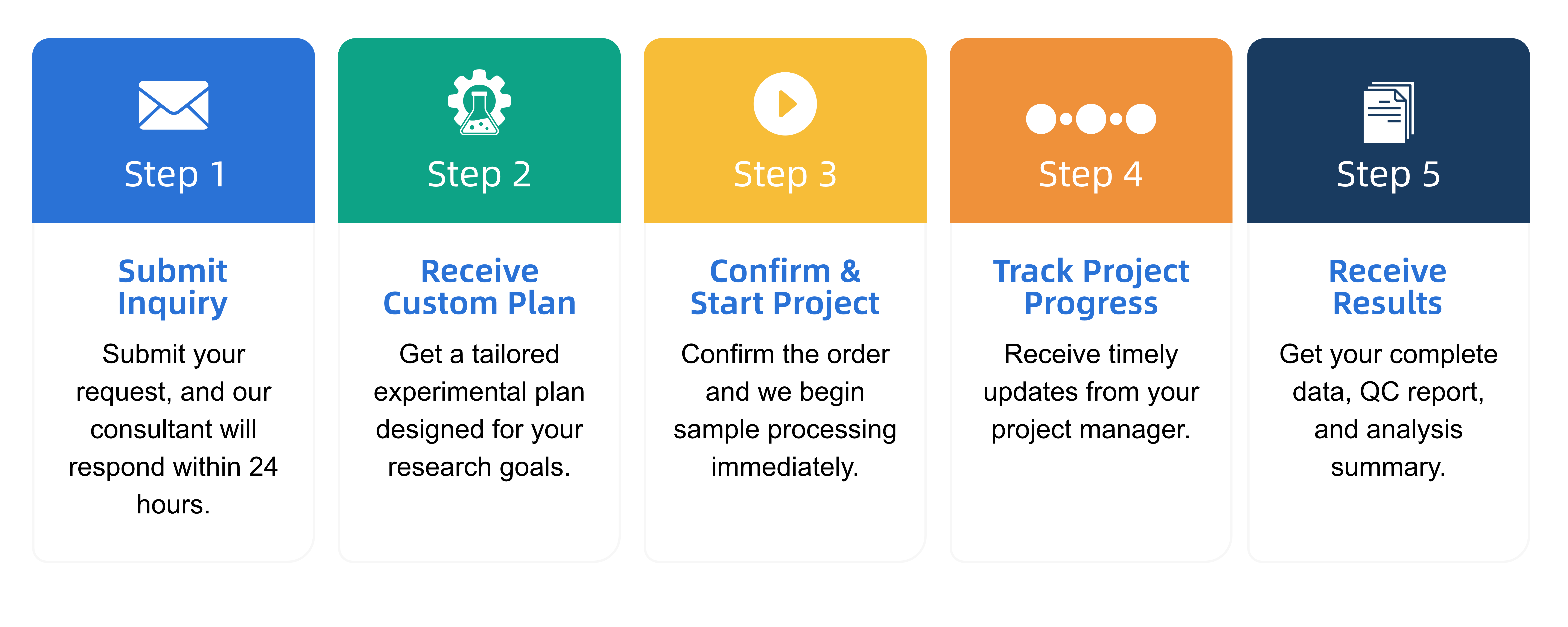
Q3: What data formats are provided?
Deliverables typically include raw LC-MS/MS data files, PTM identification and site localization tables in Excel or CSV format, and a comprehensive PDF report describing methods, quality control, and biological interpretation. High-quality spectra and figures are provided in PNG or TIFF format.
Q4: How should I prepare my samples?
- Harvest plant tissues promptly and freeze immediately after collection.
- Avoid repeated freeze-thaw cycles.
- Remove external contaminants before freezing.
- Ship samples on dry ice.
- For tissue samples, 1-2 g of fresh plant tissue is recommended for optimal analysis.
For more information, please refer to Sample Submission Guidelines for Proteomics. If you are unsure about sample preparation, our team is available for consultation and can guide you through the process to ensure optimal results.
Related Services