
MtoZ Biolabs provides the Molecular Weight Determination Service to support accurate measurement and interpretation of molecular weight information for proteins, peptides, and other biological macromolecules using multiple complementary analytical techniques. This service helps researchers confirm sample composition, verify expression or purification results, and provides reliable foundational data to support downstream structural and functional studies.
Technology of Molecular Weight Determination
To address different protein sample types and research requirements, molecular weight determination typically integrates multiple analytical techniques, enabling molecular weight assessment from complementary perspectives such as solution-phase physical properties and precise mass measurements. Below, the fundamental principles and implementation of SEC-MALS and LC-MS for protein molecular weight analysis are briefly introduced.
1. Principle of Protein Molecular Weight Determination by SEC-MALS
SEC-MALS (Size Exclusion Chromatography-Multi-Angle Light Scattering) is a molecular weight determination method based on the physical properties of proteins in solution. In this approach, proteins are first separated by size exclusion chromatography according to their hydrodynamic volume, without reliance on molecular weight calibration standards. The eluted protein molecules then pass through a multi-angle light scattering detector, where scattered light intensity is measured in real time. By combining light scattering signals with concentration measurements, the absolute molecular weight of the protein can be directly calculated.
Because SEC-MALS does not rely on calibration curves, it is well-suited for molecular weight analysis of monomers, oligomers, and protein complexes, and can simultaneously assess aggregation state and molecular weight distribution.
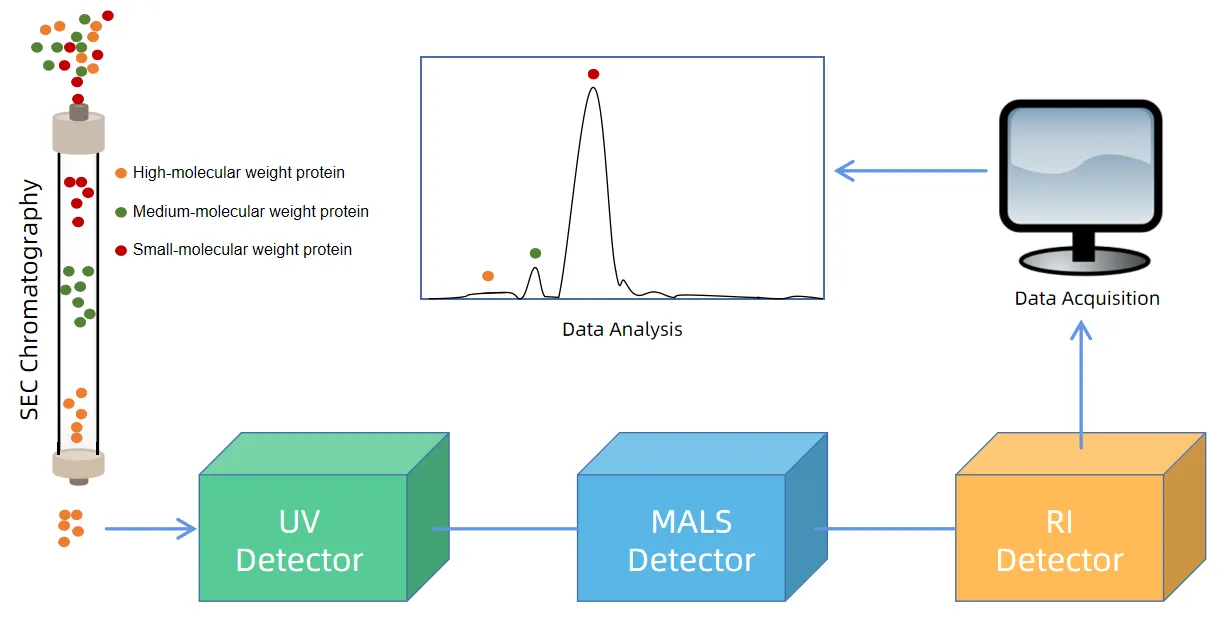
Figure 1. Workflow of Protein Molecular Weight Determination by SEC-MALS
2. Principle of Protein Molecular Weight Determination by LC-MS
LC-MS protein molecular weight analysis is based on the precise measurement of ion mass by mass spectrometry. During analysis, protein samples are separated by liquid chromatography and subsequently introduced into the mass spectrometer, where they are ionized by electrospray ionization to form multiply charged ions. The mass spectrometer detects the mass-to-charge ratios (m/z) of these charge states, and deconvolution algorithms are applied to reconstruct the true molecular weight of the protein.
LC-MS molecular weight analysis offers high resolution and high accuracy, making it suitable for confirming theoretical molecular weights, identifying post-translational modifications or processing differences, and determining molecular weights of recombinant proteins, native proteins, and various protein variants.
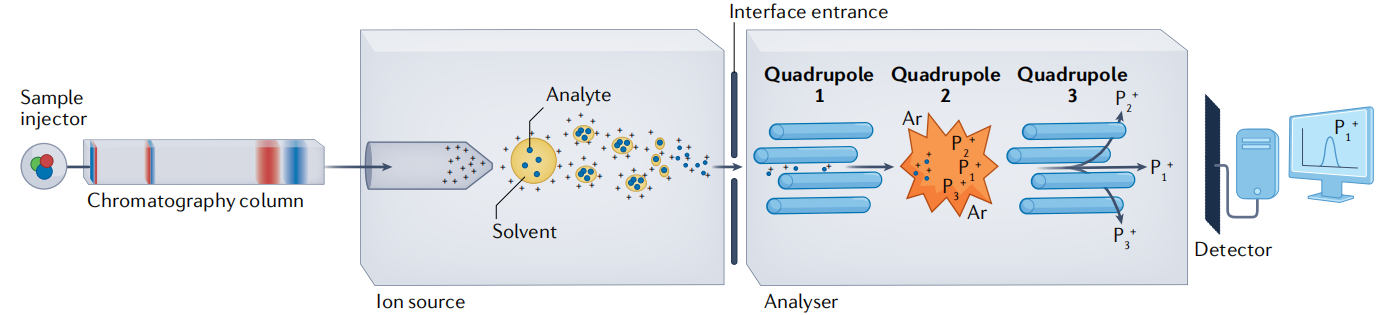
Thomas, SN. et al. Nat Rev Methods Primers. 2022.
Figure 2. The Principle of LC-ESI-MS
Molecular Weight Determination Service at MtoZ Biolabs
To accommodate different sample types and application scenarios, MtoZ Biolabs has established a comprehensive molecular weight determination service framework that supports flexible combinations of multiple analytical strategies.
- Mass spectrometry-based molecular weight determination for high-precision mass measurement
- Chromatography-based molecular weight analysis for evaluation of molecular weight distribution
- Molecular weight determination solutions for proteins, peptides, and related biological macromolecules
- Support for molecular weight analysis of both purified samples and complex sample matrices
Why Choose MtoZ Biolabs
1. Integrated Support from Multiple Molecular Weight Analysis Technologies
The protein molecular weight analysis service integrates SEC-MALS, LC-MS, and chromatography-based molecular weight evaluation methods, enabling molecular weight assessment from both solution-phase physical properties and precise mass measurements. This approach is suitable for a wide range of molecular-weight ranges and sample complexities.
2. Applicable to Diverse Protein Sample Types
The service supports recombinant proteins, native proteins, and samples with varying purity levels, meeting molecular weight determination needs across research development and quality evaluation stages.
3. Clear Workflow and Standardized Data Presentation
Analytical workflows are clearly defined, and results are delivered in standardized formats, facilitating data recording, result verification, and downstream data utilization.
4. One-Time Charge
Pricing is transparent, with no hidden fees or additional costs.
Applications of Molecular Weight Determination Service
- Confirmation of molecular weight for expressed proteins or peptides
- Quality assessment and consistency verification of purified samples
- Preliminary evaluation of molecular weight distribution or aggregation state
- Provision of foundational data for structural or functional studies
Deliverables
- Experimental procedures
- Relevant mass spectrometry parameters
- Detailed information on molecular weight determination
- Mass spectrometry images
- Raw data
Start Your Project with MtoZ Biolabs
To learn more about suitable solutions or project evaluation for the Molecular Weight Determination Service, please contact MtoZ Biolabs. Our team will provide technical support tailored to your research objectives.
FAQs
Q1: What types of samples are suitable?
A wide range of biological macromolecule samples is suitable, including proteins, peptides, and related derivatives.
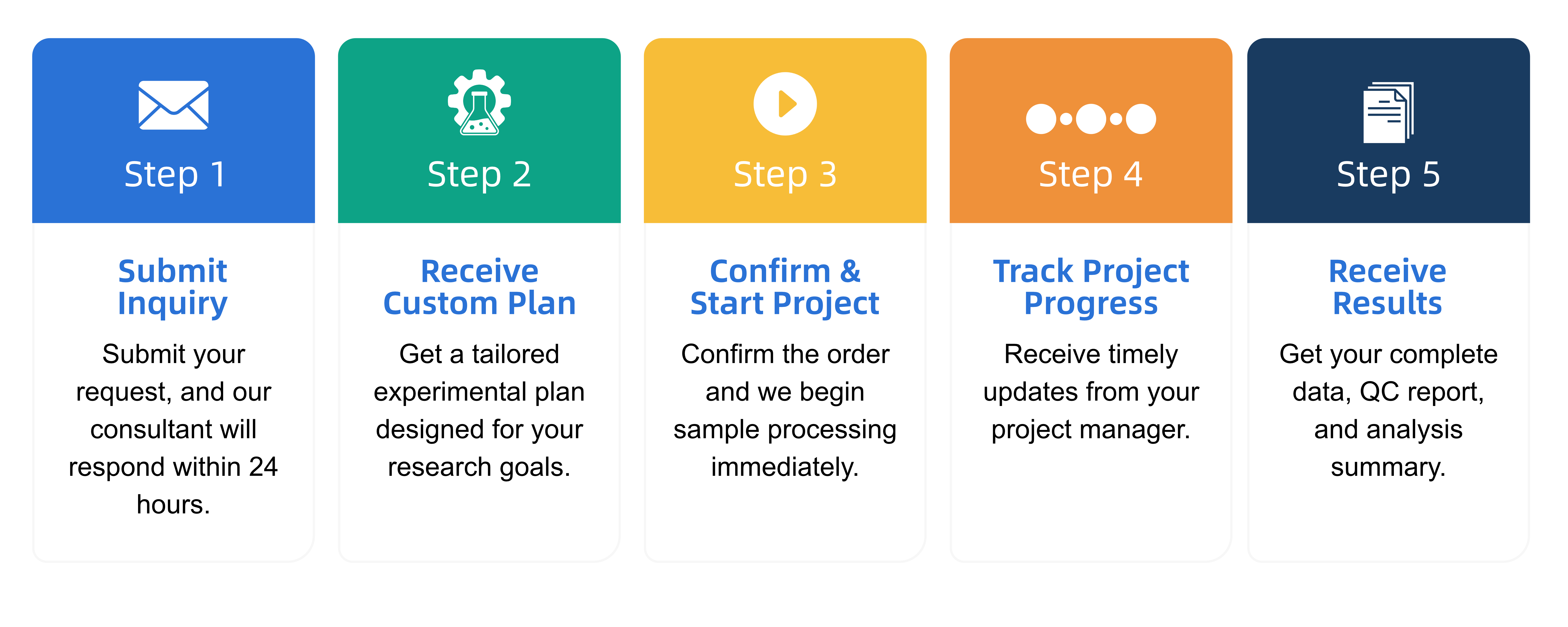
Q2: What is the service’s general workflow?
Q3: What data formats are provided?
MtoZ Biolabs provides multiple standardized data formats to ensure molecular weight determination results can be used for data review, presentation, and further research analysis. Typical deliverables include:
- Raw analytical data files generated from molecular weight determination platforms, for data traceability and further analysis
- Molecular weight determination result tables in CSV or Excel format, including measured molecular weights and related basic parameters
- Summary analysis reports in PDF format outlining analytical methods, quality control information, and key conclusions
- Key spectra or analytical result images provided in high-resolution formats (TIFF or PNG), suitable for reports or publications
If specific data structures, file formats, or journal submission requirements are needed, these can be discussed prior to project initiation, and appropriate adjustments can be made to meet research or publication needs.
Q4: How should I prepare my samples?
To ensure accuracy and reproducibility of the Molecular Weight Determination Service, MtoZ Biolabs recommends the following general guidelines prior to sample submission:
- Sample Type: A wide range of sample types is accepted, including proteins, peptides, and other biological macromolecules suitable for molecular weight determination.
- Sample Purity: Samples should be free of particulates and excessive concentrations of salts, detergents, or organic solvents to minimize interference with molecular weight measurements.
- Sample Amount: Sufficient material should be provided to meet basic molecular weight determination requirements. Exact amounts can be confirmed during project consultation based on sample type and analytical strategy.
- Storage and Shipping: Samples should be stored at low temperatures and shipped under cold-chain conditions to maintain sample stability.
- Documentation: Please provide essential background information with the samples, including sample origin, preparation method, buffer composition, and intended analytical objectives, to facilitate appropriate analysis planning.
For more information, please refer to Sample Submission Guidelines for Proteomics and Sample Submission Guidelines for Metabolomics.