
MtoZ Biolabs provides advanced proteomics services to support animal research across discovery biology, mechanistic studies, and preclinical evaluation. Our Animal Research Proteomics Solutions help investigators profile protein expression, pathways, and post-translational modifications involved in reproductive development, disease mechanisms, nutritional metabolism, and toxicology evaluation in animal models.
Proteomics in Animal Research
Proteomics is the large scale study of proteins, their abundances, modifications, and interactions, and in animal research it is used to link molecular changes to physiological functions and observable phenotypes. By profiling protein networks across organs, tissues, and biofluids, proteomics helps reveal mechanisms underlying reproductive development, disease progression, immune responses, nutritional metabolism, and toxicology outcomes in animal models and production species. This systems level view allows researchers to move beyond single markers, identifying pathways and protein signatures that explain complex traits and guide intervention, breeding, health monitoring, and safety assessment in a scientifically robust way.
Service at MtoZ Biolabs
MtoZ Biolabs offers a suite of proteomics solutions tailored to common and emerging application areas in animal research.
1. Reproductive Development and Physiology
Methods
Label free, DIA, TMT, or iTRAQ-based quantitative proteomics, PTM analysis, and PRM or SRM targeted proteomics.
Service Content
-
Comparative proteomic profiling of reproductive organs such as testis, ovary, uterus, placenta, and mammary gland
-
Time course proteomics across developmental stages, estrous cycle, gestation, or lactation
-
Pathway and network analysis of hormones, receptors, and downstream effectors
Typical Applications
-
Investigation of fertility traits in livestock
-
Genetic improvement and optimization of breeding programs
-
Characterization of reproductive disorders in companion and laboratory animals
-
Assessment of reproductive performance under different management or environmental conditions
2. Disease Mechanism and Pathology in Animals
Methods
Discovery proteomics (DIA, 4D proteomics), PTM analysis, and protein interaction mapping.
Service Content
-
Proteome profiling of disease and control animals across multiple organs or regions
-
Identification of differentially expressed proteins and dysregulated pathways
-
Integration of proteomic signatures with phenotype, pathology, or imaging readouts
Typical Applications
-
Elucidation of pathogenic mechanisms in animal diseases
-
Host response profiling to pathogens and vaccines
-
Identification of protein markers associated with disease onset, severity, or progression
3. Nutritional Metabolism
Methods
Quantitative proteomics of tissues and biofluids, metaproteomics of gut contents, and targeted assays for key metabolic enzymes and transporters.
Service Content
-
Comparative proteomics under different diets, feeding regimens, or nutrient compositions
-
Protein level assessment of metabolic enzymes, transporters, and regulatory factors
-
Correlation of proteomic changes with metabolic phenotypes such as insulin sensitivity, body composition, or energy expenditure
Typical Applications
-
Optimization of feed efficiency, growth performance, and body composition in production animals
-
Evaluation of nutritional interventions on immune status and stress resistance
-
Characterization of gut microbiota related protein changes
4. Animal Toxicology and Safety Assessment
Methods
Global and targeted proteomics, PTM analysis, and pathway centric data mining.
Service Content
-
Dose and time dependent proteomic profiling following drug, chemical, or environmental exposure
-
Identification of organ specific injury markers and stress response proteins
-
Mapping of toxicity related pathways including oxidative stress, apoptosis, inflammation, and DNA damage responses
Typical Applications
-
Preclinical toxicology and safety pharmacology
-
Off target effect evaluation and mechanism of toxicity
-
Biomarker discovery for early detection of organ injury in vivo
-
Support for safety evaluation in animal health products and feed formulation
Analysis Workflow
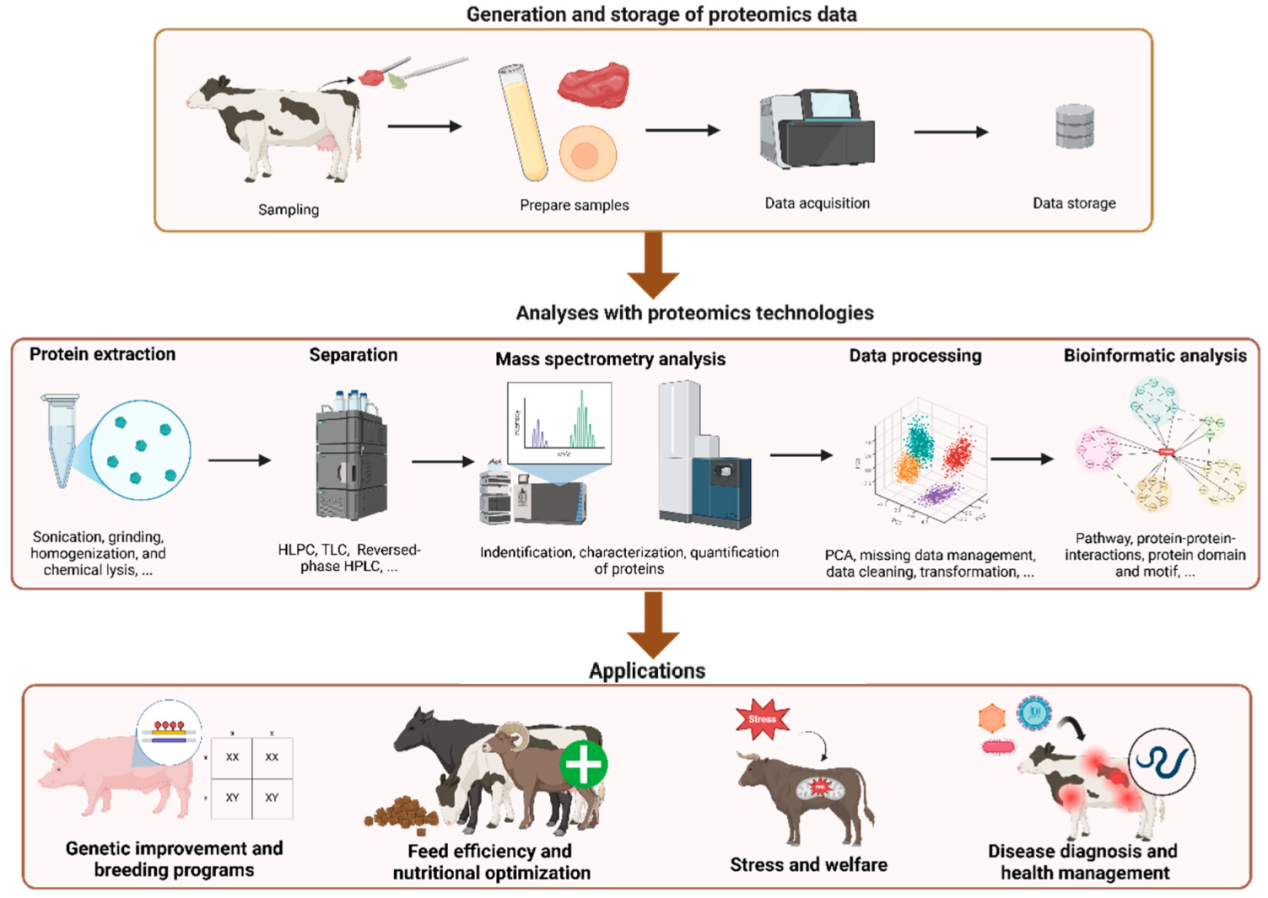
Jitjumnong, J. et al. Animals (Basel). 2025.
Figure 1. Overview of the Proteomics Workflow in Animal Research
Why Choose MtoZ Biolabs
1. Extensive Experience
We routinely handle rodent, large animal, and other species, including diverse tissues and biofluids, with standardized workflows that respect species specific characteristics.
2. Comprehensive Proteomics Capabilities
From global discovery proteomics and 4D label free workflows to multiplexed TMT or iTRAQ and targeted PRM or SRM assays, we support both broad screening and high precision quantification.
3. Integrated Discovery and Targeted Validation
We can help you move from discovery level protein signatures to targeted panels suitable for longitudinal studies, dose response evaluation, or translational research.
4. High Quality Data and Strict QC
Each project includes instrument performance monitoring, internal standards, and reproducibility checks so that your results are reliable and publication ready.
5. Customizable Project Design
Experimental design, depth of coverage, and data analysis scope can be tailored to match your objectives, sample availability, and regulatory or translational needs.
6. Dedicated Scientific Support
Our proteomics experts provide consultation on study design, sample strategy, and result interpretation, helping you connect protein level findings with biological and phenotypic outcomes in animal models.
FAQ
Q1: What types of samples are suitable?
We support a wide range of animal-derived samples, including but not limited to:
-
Solid Tissues: liver, muscle, heart, brain, kidney, gonads, gut, skin, etc.
-
Biofluids: serum, plasma, urine, milk, bile, cerebrospinal fluid, synovial fluid.
-
Whole blood, PBMCs, isolated immune cells.
-
Feces and gut contents for host–microbiota proteomics.
-
Cell lines and primary cells derived from animal tissues.
If you have a special or difficult sample type, you can contact us for a feasibility discussion.
Q2: How should I prepare my samples?
- Collect tissues quickly and keep them cold during handling
- Do not add high levels of detergents, salts, or stabilizers
- Snap-freeze tissues or pellets in liquid nitrogen and store at −80 °C
- Avoid repeated freeze–thaw cycles; aliquot when possible
- Transport samples on dry ice to maintain stability during delivery
- Clearly label samples and provide basic metadata (species, tissue type, group, time point)
Detailed requirements and recommendations can be found in the Sample Submission Guidelines for Proteomics.
Q3: What is the service general workflow?
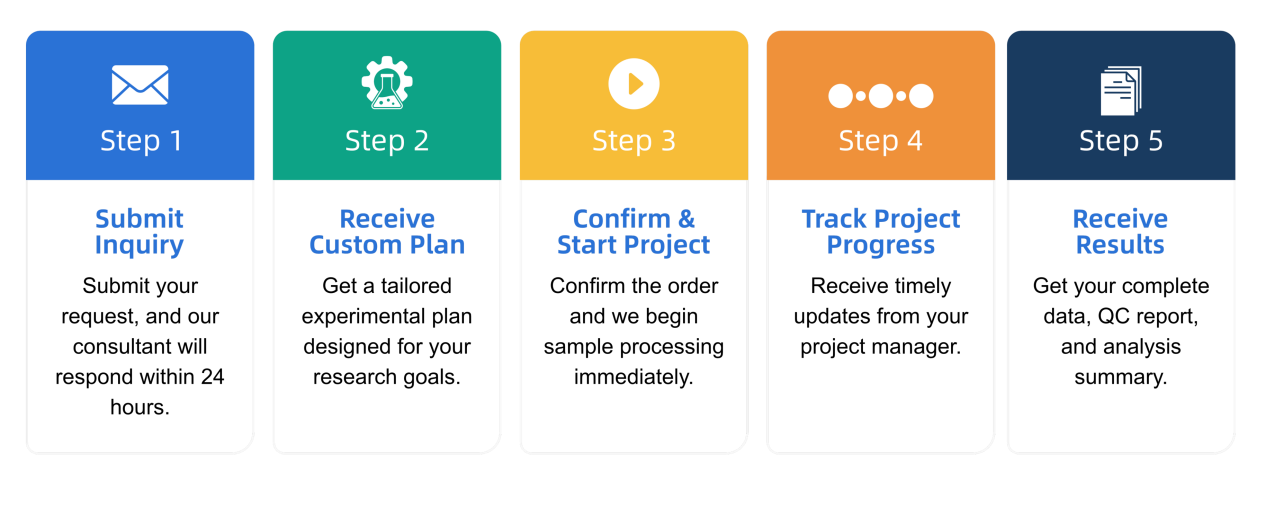
Q4: What data formats are provided?
- Raw data files in instrument formats (for example .raw, .wiff, .d)
- Protein and peptide result tables with IDs and quantification in Excel or CSV
- Key statistical and bioinformatics outputs in spreadsheet form
- Main figures (for example heatmaps, volcano plots, PCA) in high-resolution PNG or TIFF
- A concise PDF report summarizing workflow, QC, and major findings
- Additional formats can be provided on request if needed.
Start Your Project with MtoZ Biolabs
MtoZ Biolabs is ready to support your animal research with robust proteomics workflows and expert analysis.
Contact us today to discuss your research project, obtain a tailored study plan, and receive a detailed quotation.